Key Takeaway
- A certified dehumidifier pulling 20 pints a day out of a seriously damp basement costs about $16 to $31 a month at the April 2026 national average electricity rate of 18.83 cents per kWh. Light maintenance duty runs closer to $6.
- The inflated estimates multiply label wattage by 24 hours. Dehumidifiers run on a humidistat: the compressor cycles off once the room hits target humidity.
- The honest metric is cost per pint removed, from the federal integrated energy factor (IEF): about 5.2 cents per pint for small units, 2.7 cents for large ones under the ENERGY STAR Version 6.0 thresholds.
- The 50-pint class is required to be nearly twice as efficient as the small class, so the biggest machine is the cheapest to run. ENERGY STAR itself says it is better to oversize than undersize.
- A $90-a-month dehumidifier bill is a symptom, not a utility cost: a compressor that never cycles off means water is entering the space as fast as it leaves.
The scary estimates multiply the wattage label by 24 hours a day, which describes a broken unit in a flooded room. The real number for a damp basement is about $16 to $31 a month, and the biggest machine is the cheapest one to run.
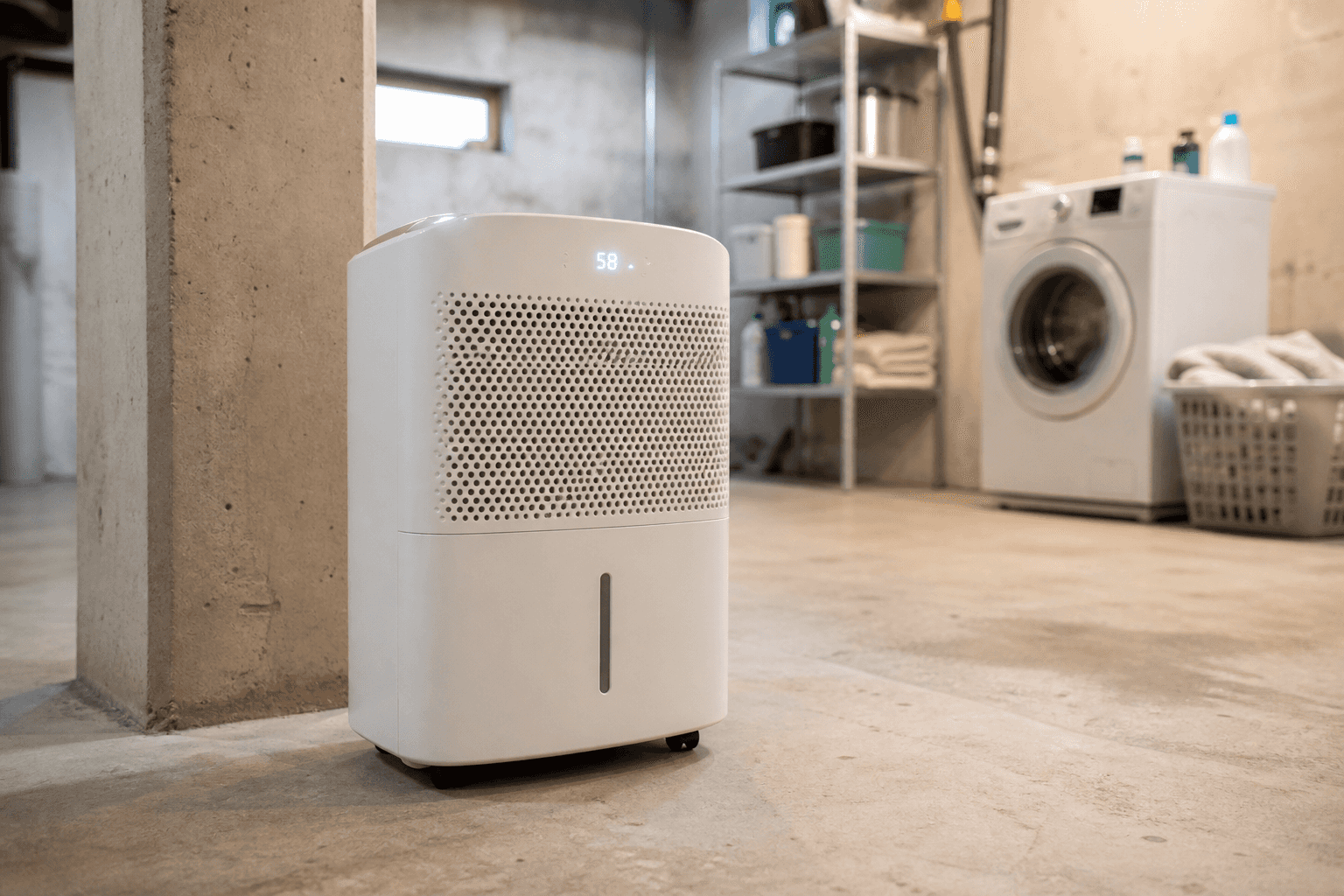
Nearly every answer to this question comes from a company with a dehumidifier, a waterproofing contract, or a solar panel to sell you, and they all do the same arithmetic: take the wattage off the label, multiply by some number of hours, apply an electricity rate from a few years ago, and present the result with a straight face. That method can spit out $90 a month or more. So here is the honest answer to "how much does a dehumidifier cost to run" in 2026: a certified unit doing real work in a seriously damp basement, pulling 20 pints of water a day, costs roughly $16 to $31 a month at the current national average electricity rate. A unit on light maintenance duty costs closer to $6. The $90 figure describes a compressor that never shuts off, which is not a utility cost. It is a symptom.
The number that matters is cents per pint, not watts
Wattage math fails for one mechanical reason: dehumidifiers run on a humidistat. The compressor works until the room hits the target humidity, then cycles off and coasts. Hours plugged in and hours drawing real power are different numbers, and the gap between them is where every inflated estimate lives.
The federal government already solved this measurement problem. Every certified dehumidifier carries an integrated energy factor, or IEF, which reports liters of water removed per kilowatt-hour consumed, standby draw included. It is a fuel-economy sticker for moisture, and it converts directly into money. Under the ENERGY STAR Version 6.0 requirements that took effect on October 1, 2025, a small portable unit (25 pints a day or less) must remove at least 1.70 liters per kilowatt-hour, a mid-size unit must hit 2.01, and a large unit rated at 50 pints or more must hit 3.30, all under federal test conditions.
Run those against the current national average residential electricity rate, 18.83 cents per kilowatt-hour as of April 2026 per the EIA's Electric Power Monthly, and the honest unit prices fall out:
| Certified size class | Minimum IEF | Cost per pint removed | Cost per gallon removed |
|---|---|---|---|
| Small (25 pints/day or less) | 1.70 L/kWh | about 5.2 cents | about 42 cents |
| Mid-size (25 to 50 pints/day) | 2.01 L/kWh | about 4.4 cents | about 35 cents |
| Large (50+ pints/day) | 3.30 L/kWh | about 2.7 cents | about 22 cents |
Read the third column again. A dehumidifier is a machine that buys back your basement one gallon at a time, for less than the price of a gumball.
What that means for a real monthly bill
The bill depends on water removed, not on the size of the machine, so the honest way to estimate is to start from how wet the space is. A basement damp enough to need 20 pints pulled out every day is a heavy workload; most spaces need less.
At 20 pints a day, a large certified unit consumes about 2.9 kilowatt-hours daily, which is 54 cents a day, about $16 a month, and roughly $99 across a six-month humid season. A small certified unit doing the same 20-pint job burns through about 5.6 kilowatt-hours daily, about $31 a month, and $192 for the season, because it runs longer to move the same water. A unit on maintenance duty, holding a mildly damp room at 8 pints a day, costs about $6.50 a month in the large class. For calibration, that damp-basement worst case lands in the same territory as the chest freezer humming next to it, whose electricity math we ran the same way in the cost to run a chest freezer.
These numbers assume the national average rate, and the spread around that average is enormous: about 12 cents per kilowatt-hour in North Dakota against nearly 47 cents in Hawaii, per the same EIA data, which means identical dehumidifiers running identical schedules can differ almost fourfold in cost by state. They also assume standardized federal test conditions, and real rooms differ from the lab in temperature and humidity, so treat the figures as well-founded estimates rather than guarantees.
The biggest dehumidifier is the cheapest one to run
Here is the part the size guides bury. The federal thresholds are not flat: the 50-pint class is required to be nearly twice as efficient per liter as the small class, 3.30 against 1.70. In practice that means the big unit removes a gallon of water for about 22 cents while the small one charges about 42 cents for the same gallon. The instinct to buy the small "efficient-looking" unit for a small problem gets the economics exactly backward.
ENERGY STAR says this itself, in its buying guidance: "it's better to oversize than undersize." A large unit with a humidistat pulls the room to target humidity quickly, shuts off, and naps; a small unit grinds all day toward the same finish line, burning more electricity to get there. In a hard-working basement, the large class saves about $15 a month over a small unit doing the same 20-pint job, which erases the price gap at the register within a season or two of heavy use, and the bigger unit lives an easier life along the way. Buy the 50-pint machine, set the humidistat to 50 percent, and let it loaf.
When the bill actually gets scary
A dehumidifier that really does cost $90 a month exists, but the appliance is not the problem. A compressor that never cycles off means the machine is losing a fight: water is entering the space as fast as it leaves, through a foundation crack, a grading problem, a missing vapor barrier, or a dryer venting indoors. At that point the dehumidifier bill is a meter on a water intrusion, and the fix is a caulk gun, a downspout extension, or a contractor, not a bigger appliance; we made the same perimeter-water argument from the insurance side in does homeowners insurance cover foundation repair. The same logic applies to running one with the windows open in July, which is paying 22 cents a gallon to dehumidify the state you live in, a cousin of the sizing mistakes we priced out in our window air conditioner cost per month breakdown.
Two cheap habits keep the real bill at the bottom of the range. Empty the bucket or hook up the drain hose, because a full bucket shuts the unit off and lets humidity rebound, forcing a longer catch-up run. And clean the filter monthly during the season, since a choked filter makes the compressor work harder for every pint.
The full picture, then: one machine, around $16 a month to work a damp basement at today's rates, and about 22 cents per gallon of water that never makes it into your joists, your drywall, or a mold remediation invoice. As insurance policies go, this one runs on a power cord and charges gumball prices.
Frequently asked questions
How much does a dehumidifier cost to run per month?
At the April 2026 national average electricity rate of 18.83 cents per kilowatt-hour, a large certified unit pulling 20 pints a day from a seriously damp basement costs about $16 a month, a small unit doing the same job about $31, and a unit on light maintenance duty around $6.50. A six-month humid season on heavy duty runs roughly $99 to $192 depending on unit size.
Does a dehumidifier use a lot of electricity?
Less than the wattage math suggests. Dehumidifiers run on a humidistat, so the compressor cycles off once the room hits target humidity; hours plugged in and hours drawing power are different numbers. The federal integrated energy factor (IEF) measures actual water removed per kilowatt-hour, and at 2026 rates a certified unit removes a gallon of water for about 22 to 42 cents.
Is it cheaper to run a large or small dehumidifier?
Large, and it is not close. ENERGY STAR's Version 6.0 thresholds require the 50-pint class to be nearly twice as efficient as the small class (3.30 versus 1.70 liters per kilowatt-hour), and ENERGY STAR's own guidance says it is better to oversize than undersize. In a hard-working basement, the large class saves about $15 a month over a small unit doing the same job.
Why is my dehumidifier bill so high?
A compressor that never cycles off means the machine is losing a fight with incoming water: a foundation crack, bad grading, a missing vapor barrier, or a dryer venting indoors. The bill is a meter on a water intrusion, and the fix is caulk, a downspout extension, or a contractor. Also check the basics: an unemptied bucket forces catch-up runs, and a clogged filter makes every pint cost more.
What humidity setting should a dehumidifier use?
Set the humidistat to 50 percent and let the unit cycle. A large unit with a humidistat pulls the room to target quickly, shuts off, and coasts, which is exactly how the low monthly costs in the federal test math are achieved. Running with windows open in humid weather defeats the machine entirely.