Key Takeaway
- A new Energy Star chest freezer uses about 215 kWh a year. At the April 2026 US average of 18.83 cents per kWh, that is $40.48 a year, roughly $3.37 a month or 11 cents a day.
- The $30-a-year figure repeated all over the internet embeds an electricity rate from years ago. Power is up 25 percent since 2022, so most published freezer costs are stale.
- Your rate and location swing the bill more than the model does: the same freezer runs about $27 a year in North Dakota and about $100 in Hawaii.
- Chest beats upright by 84 percent because cold air spills out of an upright's front door, and a manual-defrost model uses roughly half the energy of an auto-defrost one.
- All-in, electricity plus the freezer amortized over its 12-year life, it costs about $61 a year, or $1.18 a week. Beat that in grocery savings and it pays for itself. The real risk is forgotten food, not the power bill.
Energy Star still prices it at about $30 a year, using an electricity rate the average American stopped paying a while ago. At April 2026 rates the real number is about $40, which is still cheaper than the question worth asking.
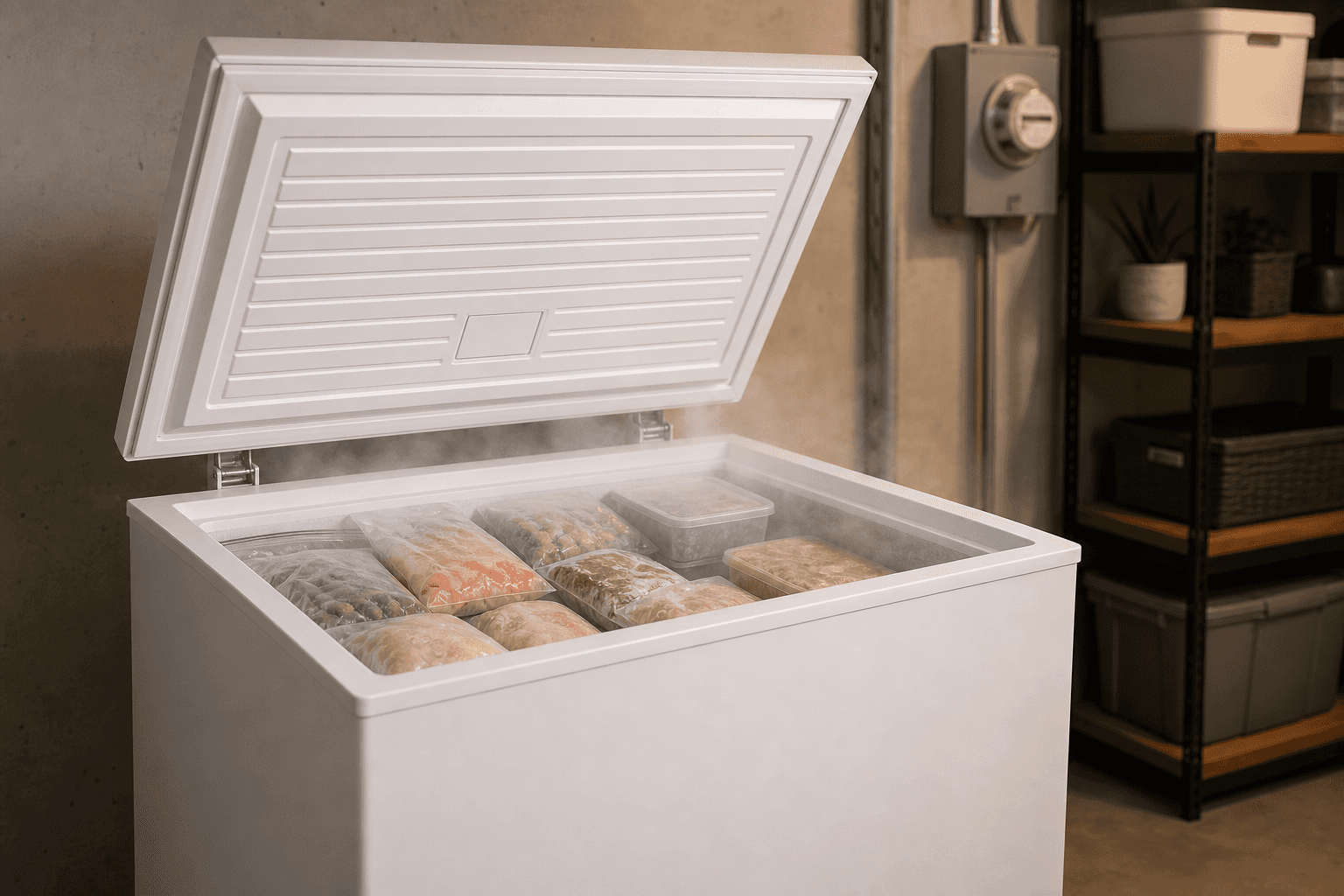
The cost to run a chest freezer is one of the few appliance numbers small enough to compute on a napkin, so here's the napkin. An Energy Star certified chest freezer uses about 215 kilowatt-hours a year, per Energy Star's own specification. The average U.S. residential electricity rate hit 18.83 cents per kilowatt-hour in April 2026, per the EIA's Electric Power Monthly. Multiply them and a new chest freezer costs $40.48 a year to run: $3.37 a month, about 11 cents a day.
If you've seen a different number, you probably have. Page one quotes $6.24 a month, $18 to $36 a year, $2.87 a month, and Energy Star's famous $30. Every one of those is the same 215-kilowatt-hour appliance multiplied by a different year's electricity rate: one site assumes 10 cents, a utility assumes 12, others assume 15 and 17, and Energy Star's own dollar figure embeds a rate around 14 to 15 cents. Electricity is up 25 percent since 2022 per the EIA's own series, and the freezer pages never got the memo. The kilowatt-hours are stable. The rate is not.
The current math, with the arithmetic showing
| Freezer | Annual energy | Cost per year at 18.83 cents/kWh |
|---|---|---|
| Energy Star chest freezer | 215 kWh | $40.48 |
| Energy Star upright freezer | 395 kWh | $74.38 |
| Pre-2010 freezer (2 to 3x modern use, per utility guidance) | 430 to 645 kWh | $81 to $121 |
Geography stretches those numbers more than any spec sheet. At North Dakota's 12.35-cent rate, the same chest freezer runs $26.55 a year; at Hawaii's 46.62 cents, it's $100.23. Both figures come from the EIA's April 2026 state data, and both round to the same conclusion: for most households, a modern chest freezer costs less per month than a single fancy coffee. To run the napkin on your own unit instead of the national average, pull two numbers: the annual kilowatt-hours printed on the yellow EnergyGuide label or in the manual, and the per-kilowatt-hour rate on your own electric bill. Multiply. That's the entire method, and it beats every calculator on page one because it uses your rate instead of somebody's 2022 assumption. The label's kilowatt-hour figure already accounts for the compressor cycling on and off rather than running around the clock, so resist the urge to multiply wattage by 24 hours a day; that's how the internet's scariest freezer estimates get made.
The unit that changes the story is the old one. A garage freezer from the 2000s pulling two to three times the modern draw is quietly a $100-a-year appliance, which is why Energy Star's replace-and-recycle pitch, about $300 saved over a freezer's 12-year lifetime, was written with exactly that unit in mind.
Chest beats upright by 84 percent, and the lid is why
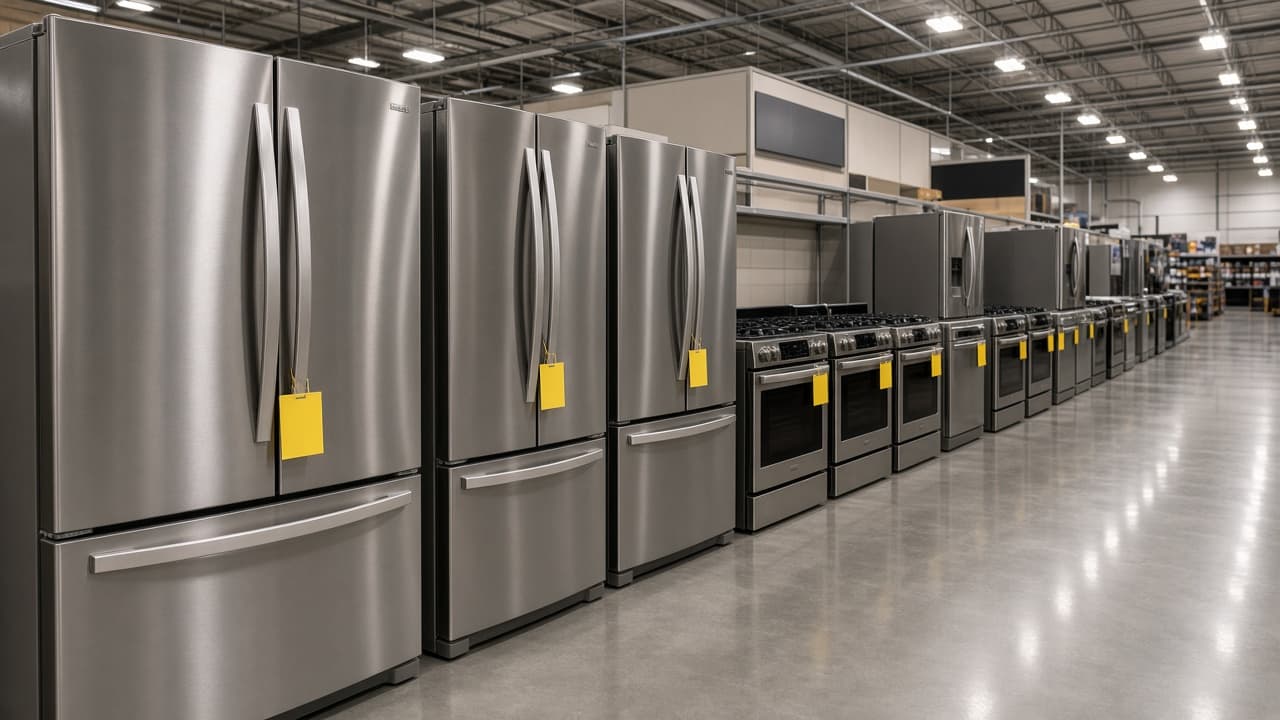
The upright freezer is the same idea with worse physics. Cold air is heavy; open a chest freezer's lid and the cold mostly sits there, while an upright's front door pours it onto your feet. Energy Star's specs put the gap at 215 versus 395 kilowatt-hours a year, which means the upright uses 84 percent more energy for the convenience of shelves, about $34 a year at current rates. Energy Star adds a second lever hiding in the spec sheet: manual defrost freezers use half the energy of automatic defrost models. The trade is scraping frost out once or twice a year yourself, and the quarter-inch rule applies, because frost past that point insulates the coils and makes the compressor work for its money.
Placement moves the bill more than the model
Where the freezer lives matters almost as much as what it is. Utility guidance puts the penalty for an uncooled garage in a hot climate at up to 50 percent, roughly $20 a year on the chest figure, and Energy Star's advice is blunt: keep the freezer indoors, ideally a basement, unless your climate is mild, because temperature extremes also shorten the compressor's life. The garage-appliance problem has a cold-weather flip side too, which we covered in our best refrigerator for an unheated garage piece. A freezer is a box that wants a boring room. Give it one, keep the frost thin, set it at 0°F, and the spec-sheet number is the number you'll actually pay.
The real question is what the freezer earns
Eleven cents a day was never the decision. The decision is whether the box pays rent, so run it all-in. Take the $40.48 in electricity, add a $250 compact chest freezer (HomeGuide's range for compact units is $150 to $450) spread across Energy Star's 12-year freezer lifetime, or about $21 a year, and the whole operation costs $61 a year. That's $1.18 a week. Beat $1.20 a week in grocery savings and the freezer is free; beat it badly and it's a profit center. One markdown rack of chicken thighs can clear the bar for a month, and the math behind buying birds whole instead of in parts, which we ran in is it cheaper to buy a whole chicken, is exactly the kind of spread a freezer lets you actually capture.
The federal food-safety canon makes the bulk strategy less risky than it feels. Per the FDA, food held at 0°F stays safe indefinitely; the date charts are quality windows, not safety cutoffs, and freezer burn is a texture problem, not a danger. Outages have a rulebook too: FoodSafety.gov says a full freezer holds a safe temperature for about 48 hours with the door closed, 24 if it's half full, anything still carrying ice crystals can be refrozen, and USDA guidance notes 50 pounds of dry ice will carry an 18-cubic-foot freezer for two days. The FDA's cheap insurance is an appliance thermometer living in the freezer, which the agency calls generally inexpensive and the best way to know your temperatures: if it reads 40°F or below when the power returns, everything inside can be refrozen, no guessing required. A full freezer is both cheaper to run per pound and safer in a blackout, which is a rare case of the frugal move and the cautious move being the same move.
The honest failure mode isn't the electricity. It's entropy. A chest freezer earning nothing is a $61-a-year subscription to mystery bags, and the appliance only profits when the inventory turns, so tape a list to the lid and date what goes in. We worked the other side of this aisle in our window air conditioner cost per month breakdown, and the lesson repeats: the machines are cheap to run. Eleven cents a day keeps last month's meat prices frozen in place. The electricity was never the cost worth worrying about. The forgetting is.