Key Takeaway
- The shelf tag really is cheaper: USDA data puts a fresh whole chicken around $2.03 per pound versus about $4.17 per pound for boneless, skinless breast in spring 2026.
- But a whole bird is only about half edible meat by weight (closer to two-thirds if you eat the skin), so the number that matters is cost per pound of meat you actually eat.
- Yield-adjusted, the gap nearly closes: a $2.03 bird works out to about $4.06 per pound of boneless meat, almost identical to packaged breast. Eat the skin and it drops near $3.
- The real payoff is the carcass. The bones and trimmings make a couple of quarts of stock worth several dollars, and the bird hands you dark meat you would pay extra to buy on its own.
- Buying parts wins for the breast-only shopper who discards the rest, and whenever breast goes on sale under about $3 per pound.
USDA price data backs the old advice: a whole bird runs about half the per-pound price of boneless breast. The honest comparison is cost per pound of the meat you actually eat, and that gap is far smaller than the sticker suggests.
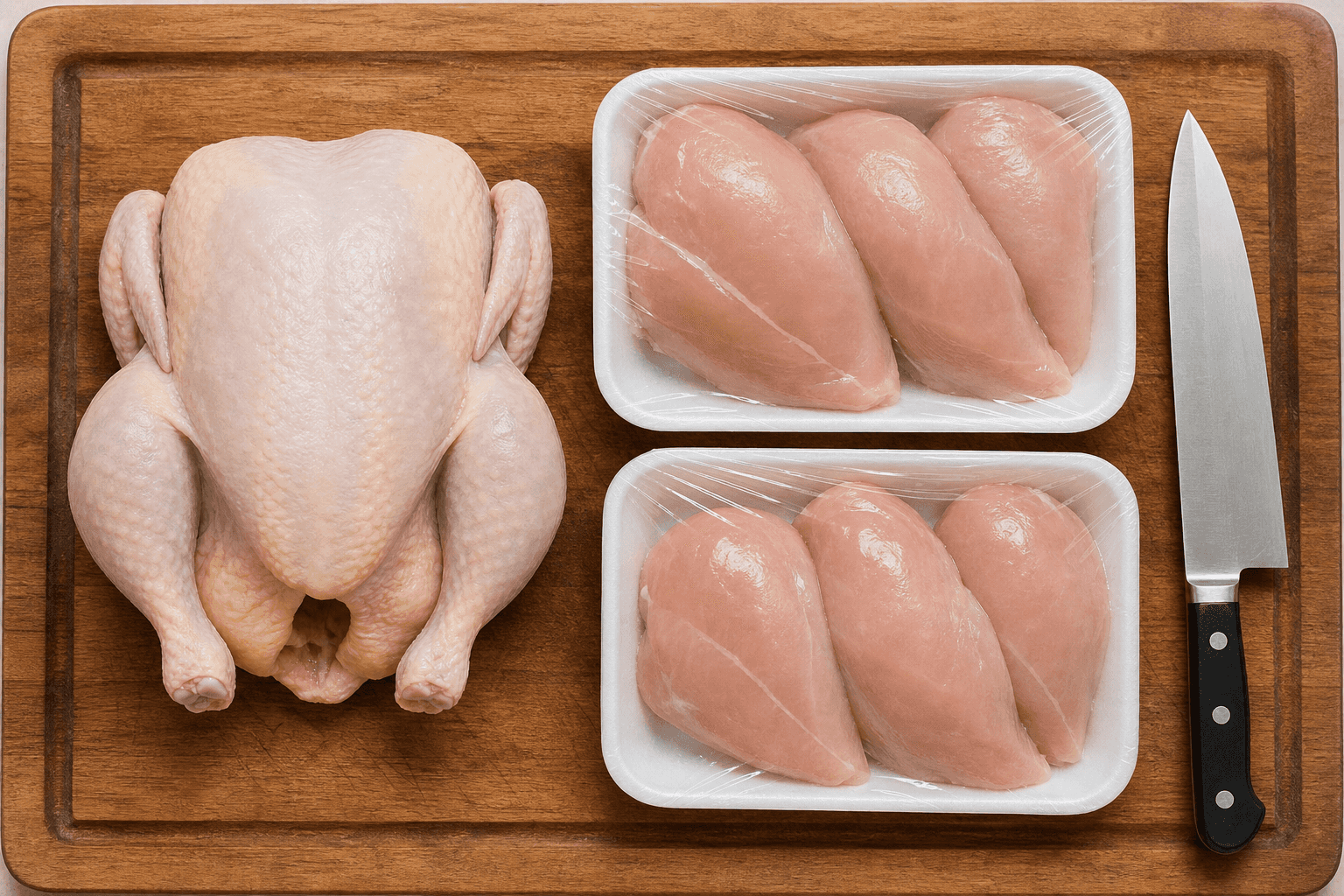
Every frugal-cooking guide repeats the same line, and the sticker price agrees with it. It is cheaper to buy a whole chicken than to buy the same weight in boneless, skinless breasts, and it is not close. The problem is that the per-pound number on the shelf is the wrong number to compare, because a whole bird is not a pound of meat. It is a pound of meat, bone, skin, and fat, and you paid for all of it. Once you do the comparison the way your kitchen actually experiences it, in dollars per pound of meat you can put on a plate, the famous savings shrink to something much more modest, and the real case for the whole bird turns out to live somewhere else entirely.
The sticker price gap is real and large
Start with the easy part, because the conventional wisdom is not wrong about the shelf tag. As of spring 2026, the USDA's retail price data puts a fresh whole chicken at roughly $2.03 per pound nationally, a figure that has barely moved since late 2025. Boneless, skinless breast over the same stretch ran about $4.17 per pound in the government's average-price series. That is a whole bird selling for under half the price of the most popular cut, pound for pound.
The reason is not a grocery-store conspiracy. A whole chicken is the least processed form the bird comes in, so you are not paying anyone to break it down, debone it, skin it, and tray it up. Breast is also simply the cut Americans want most, and demand sets the premium. Legs and thighs, which fewer shoppers fight over, sit far cheaper: bone-in legs averaged around $1.74 per pound in early 2026, below even the whole bird. The pricing ladder rewards you for doing the butchering and for eating the parts other people skip.
A whole bird is not a pound of meat
Here is the number the guides leave out. A raw whole chicken is somewhere around half edible meat by weight once you have removed the bone and set aside the skin and fat. Count the skin as food, which it is, and the usable share climbs to roughly two-thirds. The rest is frame. Whichever way you slice it, a meaningful slab of that cheap per-pound weight is structure you will not be chewing.
That changes the comparison completely. You do not eat sticker pounds, you eat boneless pounds, so the figure that decides the question is cost per pound of edible meat. Poultry-science measurements of broilers put the edible yield a little higher still, in the low-to-mid 70 percent range with the skin and giblets counted in, with a meat-to-bone ratio of about two and a half to one. A boneless, skinless breast, by contrast, is nearly all usable weight, which is exactly what you are paying the premium for: someone already threw the frame away for you.
The yield-adjusted math nearly erases the gap
Run the division and the gap you started with mostly disappears. Take the whole bird at $2.03 per pound and assume half of it ends up as boneless meat. That puts the effective price of that meat at about $4.06 per pound. The boneless, skinless breast sat at $4.17. On a strict meat-for-meat basis, raw boneless chicken from a whole bird and raw boneless breast from a package cost very nearly the same thing.
The picture improves for the whole bird the moment you stop discarding edible parts. Keep and eat the skin, and the usable yield rises toward two-thirds, which drops the effective cost of that meat to roughly $3 per pound. In round numbers, a four-pound bird at about $8 yields close to two pounds of boneless meat, which is roughly what two pounds of packaged breast would have cost you anyway. That is a real saving over breast once the skin is in the picture, but it is a few dollars on a single bird, not the two-to-one windfall the shelf tag implied. The honest headline is that the whole chicken is cheaper per pound of meat, modestly, and only if you actually eat the whole chicken.
The carcass is where the whole bird pulls ahead
The yield math treats the bones as garbage, and that is where it sells the whole bird short. A roasted carcass plus the skin and trimmings makes a couple of quarts of stock, which is the part of the bird that quietly pays you back. Boxed broth runs several dollars a quart, so a frame you would otherwise bin is worth more than the cents-per-pound it added to the sticker. Simmer it down in a slow cooker while you deal with the meat and the bird stops being a slab of breast and becomes three or four different things.
There is dark meat in that accounting too. A whole bird hands you thighs and drumsticks that are richer than breast and that you would pay a separate premium to buy on their own. If raw cost per pound of meat is the only thing you care about, you should not be buying breast at all: bone-in leg quarters at under $2 per pound are the cheapest chicken in the case, and they come with their own bones for the same stockpot.
When buying the parts actually wins
None of this rescues the whole bird for one specific shopper: the person who eats boneless breast and nothing else. The two breast halves are only about a fifth of a whole bird by weight, so a breast-only shopper who tosses the rest is paying for and then discarding most of what they carried home. If the thighs go in the trash, the skin gets peeled off, and the carcass never sees a pot, then you have spent fifteen minutes with a knife to arrive at meat that cost about what the packaged breast would have. For that kitchen, the whole bird is a worse deal dressed up as a better one.
Two more things tilt the math toward parts. Breast goes on sale constantly, and a sale price under $3 per pound beats the yield-adjusted cost of a whole bird outright. And your time and freezer space are not free; if breaking down birds and storing carcasses is a chore you will not keep up, the theoretical saving never lands. Once you do have a pile of cooked meat and stock on hand, our roundup of easy dinner ideas turns it into a week of meals. The rule that actually holds: buy whole when you will use the whole thing, and buy the cut on sale when you will not.
The conventional wisdom is right that a whole chicken is cheaper. It is just cheaper for a smaller reason than the price tag claims, and the savings are hiding in the parts most people throw away.
Frequently asked questions about buying whole chicken
Is it cheaper to buy a whole chicken than chicken breast?
On the shelf, yes: a whole chicken runs about $2.03 per pound versus about $4.17 for boneless, skinless breast (USDA, spring 2026). But a whole bird is only about half edible meat by weight, so the yield-adjusted cost is roughly $4.06 per pound of boneless meat, nearly the same as breast. The whole bird only pulls clearly ahead once you also eat the skin and dark meat and make stock from the carcass.
How much meat do you actually get from a whole chicken?
About half the raw weight is boneless meat once you remove the bones, skin, and fat. If you count the skin as food, the usable share rises to roughly two-thirds, and poultry-science measurements that include skin and giblets land in the low-to-mid 70 percent range. The rest is the frame, which is worth keeping for stock.
When is it cheaper to buy chicken parts instead of a whole chicken?
When you only eat one cut and discard the rest, and when that cut is on sale. The two breast halves are only about a fifth of a whole bird, so a breast-only shopper who tosses the thighs, skin, and carcass pays for meat that ends up costing about what packaged breast would. A breast sale under $3 per pound also beats the yield-adjusted whole-bird price.
What is the cheapest cut of chicken?
Bone-in leg quarters and bone-in legs are the cheapest, often under $2 per pound, below even the whole bird. They are dark meat, which is richer and harder to overcook than breast, and they come with bones you can add to the stockpot, so the value extends past the meat itself.