Key Takeaway
- Every major Garage-Ready refrigerator sold in the US in 2026 has the same operating floor: 38 degrees Fahrenheit ambient. The Frigidaire FFTR2045VW is the lone exception at 45, which is worse. Below 32 degrees, none of them cool at all per the manufacturers' own documentation.
- The $799 GE GTS22KGNRWW (21.9 cubic feet, top freezer, 33 inches wide, on sale at Lowe's against a $1,199 list) is the right buy for a moderately cold garage that stays above 38 degrees year-round. Whirlpool's WRB533CZJB at 12.9 cubic feet is the narrow-space alternative. Frigidaire's FFTR2045VW is harder to recommend at the same capacity.
- For garages that drop below 32 degrees in winter (most of the northern US has January nightly lows in that range), buy a Garage-Ready FREEZER plus a small beverage cooler instead of a Garage-Ready REFRIGERATOR. The Gladiator 17.8-cubic-foot Garage-Ready Upright Freezer is rated for 0 to 110 degrees, a 38-degree-lower floor than any garage-ready fridge. Total combo cost is $1,800 to $2,300 against the $799 GE, and it survives February in Cleveland.
- If your garage stays inside the 50 to 85 degree band year-round (most attached garages in moderate climates), the Garage-Ready label is a sticker tax. A standard top-freezer with no garage-ready features will run there without complaint.
- The reason Garage-Ready fridges fail below 32 degrees is structural, not a defect. A standard fridge has its evaporator coils inside the freezer compartment and a single thermostat in the fresh-food section. When the garage gets cold enough that the fresh-food compartment matches the freezer's set point, the compressor stops cycling and the freezer thaws. No retrofit kit fixes this, and no manufacturer claims to.
Every "Garage-Ready" fridge sold in the US bottoms out at 38 degrees Fahrenheit ambient. One bottoms out at 45 degrees. Below 32 degrees, none of them cool at all. The manufacturers say so themselves, in the support docs nobody reads.
GE publishes a support page for its Garage-Ready refrigerator line that contains this sentence: "Below 32 degrees Fahrenheit there is no cooling capability at all." Whirlpool's documentation says the same thing in different words. So does Gladiator's. Anyone shopping for the best refrigerator for unheated garage use needs to start there, because the gap between the marketing on the box and the spec sheet inside the manual is where homeowners lose freezer meat in February.
The "Garage-Ready" sticker buys exactly one thing: a 17-degree extension of the operating floor, from a standard 55 degrees down to 38. Below 38 degrees the appliance starts losing efficiency. Below 32 it stops cooling. Every major Garage-Ready refrigerator on the US market in 2026 carries the same floor, with the lone exception of one Frigidaire model that is actually worse at 45.
Why a standard fridge fails when the garage gets cold
A top-freezer refrigerator has its evaporator coils inside the freezer compartment. The compressor pumps refrigerant through those coils to make the freezer cold, and a small fan pushes some of that cold air down through a damper into the fresh-food section below. A single thermostat, located in the fresh-food compartment, reads the air temperature and tells the compressor when to run.
That single-thermostat design is the problem. When the garage drops to, say, 30 degrees, the air inside the fridge cools to roughly the same temperature through heat transfer across the walls. The thermostat reads 30 degrees, well below the 37-degree set point, and tells the compressor to stay off. The freezer's evaporator stops getting refrigerant. The freezer warms up to whatever the garage is.
What happens next depends on how cold the garage gets, and the failure modes are inverted in a way most homeowners never see coming. If the garage sits between 32 and 38 degrees, the freezer thaws because its contents end up sitting in above-freezing air. If the garage drops below 32, the freezer contents stay frozen passively (they're sitting in below-freezing air), but now the fridge contents freeze, which ruins milk, eggs, and most leftovers. An appliance technician on JustAnswer described what happens in deep cold: the few times the compressor does kick on, frigid air from the freezer drops into the fridge below and turns the milk into a brick.
Per Whirlpool's product help documentation, a standard fridge is built for an ambient temperature range of 55 to 110 degrees Fahrenheit. Below 55 degrees, the appliance fails in whichever direction the thermostat encounters first.
What Garage-Ready actually buys you
A Garage-Ready unit handles the cold-thermostat problem with one of two approaches depending on the manufacturer. GE adds dual temperature controls, with a separate sensor and small heater coil for the freezer. Whirlpool uses an electronic damper that adjusts airflow when ambient drops. Both approaches accomplish the same thing: the operating floor extends from 55 degrees down to 38. Whirlpool's product help documentation tells owners to switch to the garage-ready airflow setting whenever ambient sits in that 38-to-55-degree band.
Some garage-ready coverage online claims the operating range goes all the way down to 0 degrees Fahrenheit. That's a confusion between two different product lines. Garage-Ready FREEZERS can hit 0-degree ambient. Garage-Ready REFRIGERATORS cannot. They are not the same machine and they do not carry the same spec.
The buying decision is simpler than the marketing implies
Three Garage-Ready refrigerators are worth comparing in 2026, and the spec ranking is straightforward.
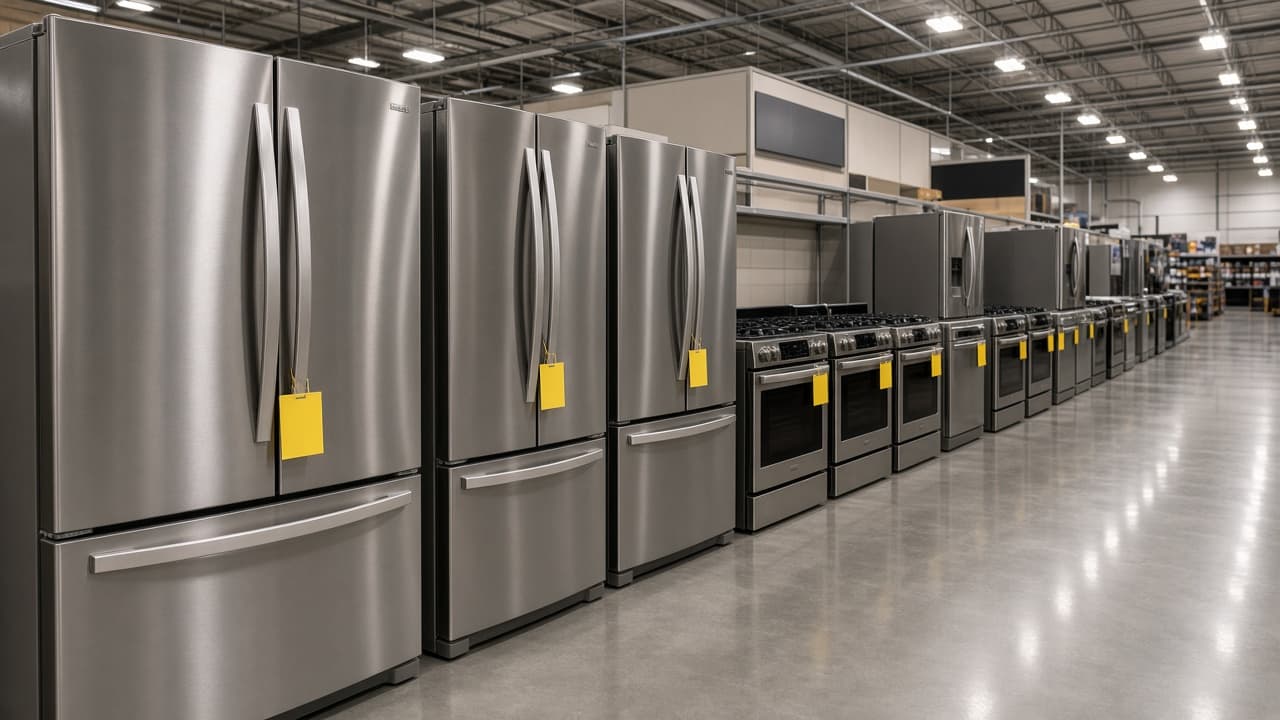
The GE GTS22KGNRWW (21.9 cubic feet, top freezer, 33 inches wide) is rated for 38 to 110 degrees Fahrenheit ambient and currently sells for $799 at Lowe's against a $1,199 list. The fresh-food and freezer sections have separate temperature controls, which is the dual-thermostat hardware doing the actual work. It ships in white, black, slate, and stainless variants.
Whirlpool's WRB533CZJB (12.9 cubic feet, bottom freezer, 24 inches wide) is also rated for 38 to 110 degrees. It costs more per cubic foot than the GE but fits narrow spaces where a 33-inch top-freezer won't go. Whirlpool's electronic damper handles the cold-cycling problem the way GE's dual thermostats do.
The Frigidaire FFTR2045VW (20 cubic feet, top freezer) is rated for 45 to 110 degrees, a 7-degree worse floor than either competitor at comparable capacity. The narrower operating range makes it harder to recommend unless dimensions or stock force the choice.
For a garage that stays above 38 degrees year-round, the GE is the answer.
The 32-degree problem no fridge fixes
Here's where the marketing and the manuals diverge. GE's own support documentation states explicitly that the unit produces no cooling at all when ambient drops below 32 degrees. Gladiator (a Whirlpool subsidiary that sells a $1,799 garage-styled all-refrigerator) puts a similar warning on its product pages: "Refrigerator contents may freeze if room temperatures reach 32 degrees Fahrenheit (0 degrees Celsius) or below." The JustAnswer technician quoted earlier put it bluntly: even with a Garage-Ready unit, the fridge runs into problems if ambient stays below 32 degrees for over 24 hours, and this cannot be resolved with any model or brand.
NOAA's 1991 to 2020 climate normals put the average January low in Chicago at 18.8 degrees Fahrenheit. Most of the northern US, including the Great Lakes corridor, the Upper Midwest, and northern New England, sits in similar territory or colder. A detached garage in any of those places tracks ambient outdoor air and spends weeks at a time below 32 degrees in winter. An attached garage runs warmer, but how much warmer depends on insulation, the garage door, sun exposure, and how often the door opens. There is no universal number. What's clear is that anywhere January overnight lows routinely sit below 32 degrees, a Garage-Ready refrigerator placed in an uninsulated space spends a meaningful share of winter outside its rated operating range. (For homeowners weighing whether to insulate or condition the garage at all, our guide to central AC vs mini-split systems in 2026 covers what it actually costs to put climate control in a space the original house build skipped.)
What to buy if your garage drops below 32
For garages that cross the 32-degree line at any meaningful frequency, the answer is a Garage-Ready FREEZER plus a small beverage cooler, not a refrigerator. The Gladiator 17.8-cubic-foot Garage-Ready Upright Freezer (model GAFZ30FDGB) is rated for 0 to 110 degrees Fahrenheit per the manufacturer, a full 38-degree lower floor than its refrigerator counterpart. Freezers don't have the cold-cycling problem of refrigerators, because a freezer's job is to stay below freezing and a cold ambient just makes that job easier. The compressor runs when needed and the contents stay frozen.
For sodas, condiments, and the small handful of refrigerated items that go in a "second fridge," a beverage cooler ($300 to $500 retail for a 100-can-class freestanding model) handles the rest. The Gladiator freezer carries a $1,799 list and is frequently discounted, so the total combo cost lands somewhere around $1,800 to $2,300 against the $799 GE Garage-Ready. That premium buys a setup that survives February in Cleveland. (And if the broader winter infrastructure question is keeping that freezer running through a multi-day storm outage, our breakdown of the best portable power station for home power outages covers the runtime math for chest and upright freezers.)
A heater-coil retrofit kit, sold for some older Frigidaire and Kenmore models, warms the area around the existing thermostat to keep the compressor cycling. The kits work in moderate cold, but they void warranties and they don't help when ambient drops well below freezing.
When you don't need a Garage-Ready fridge at all
If you live somewhere your garage stays inside the 50 to 85 degree band year-round, the Garage-Ready label is a sticker tax. Bob Vila pegs the practical operating range for a kitchen refrigerator at 50 to 85 degrees Fahrenheit ambient, and most attached garages in moderate climates fall within that band. A standard top-freezer with no garage-ready features will run there without complaint. Phoenix and San Antonio garages have a heat problem, not a cold problem, and the upper end of the standard operating range (110 degrees) handles the heat.
For everyone else, the picture is cleaner than most online listicles imply. The $799 GE GTS22KGNRWW is the right buy at the right price for moderately cold garages. For garages that hit 25 degrees overnight in January, the answer isn't a better refrigerator. It's not a refrigerator at all.
Frequently asked questions about garage refrigerators
What is the best refrigerator for an unheated garage in 2026?
The GE GTS22KGNRWW (21.9 cubic feet, top freezer, 33 inches wide) at $799 sale price against a $1,199 list is the consensus best buy in 2026 for a garage that stays above 38 degrees Fahrenheit year-round. It is rated for 38 to 110 degrees ambient, uses dual temperature controls (separate sensors and a freezer heater coil) to handle the cold-cycling problem, and is widely available at Lowe's and Home Depot in white, black, slate, and stainless variants. The Whirlpool WRB533CZJB at 12.9 cubic feet is the narrow-space alternative for 24-inch openings. The Frigidaire FFTR2045VW is harder to recommend because its 45-degree floor is 7 degrees worse than either competitor at comparable capacity.
What does "Garage-Ready" actually mean on a refrigerator?
Garage-Ready means the operating floor has been extended from 55 degrees Fahrenheit (the standard kitchen-refrigerator minimum) down to 38 degrees. Manufacturers achieve this with one of two designs. GE adds dual temperature controls with a separate freezer sensor and a small heater coil. Whirlpool uses an electronic damper that adjusts airflow when ambient drops. Both approaches solve the same problem: keeping the compressor cycling when the air inside the fridge gets too cold for a single thermostat to do its job. Garage-Ready does NOT mean the unit operates below 32 degrees. Below 32, no Garage-Ready refrigerator on the market cools at all.
Why does a regular refrigerator stop working in a cold garage?
Standard refrigerators have a single thermostat in the fresh-food section that controls when the compressor runs. When the garage gets cold enough that the air inside the fridge approaches the set point on its own (through heat transfer across the walls), the thermostat tells the compressor to stay off. Without the compressor, the freezer warms up because its evaporator coils stop getting refrigerant. If the garage is between 32 and 38 degrees, the freezer thaws. If the garage is below 32, the freezer contents stay frozen but the fridge contents freeze, ruining milk and eggs. The standard ambient operating range is 55 to 110 degrees Fahrenheit per Whirlpool's product help docs, and the failure modes start as soon as ambient drops below 55.
Will a Garage-Ready refrigerator work below 32 degrees Fahrenheit?
No. GE's own support documentation states explicitly: "Below 32 degrees Fahrenheit there is no cooling capability at all." Gladiator (a Whirlpool subsidiary) carries a similar warning: "Refrigerator contents may freeze if room temperatures reach 32 degrees Fahrenheit (0 degrees Celsius) or below." An appliance technician on JustAnswer puts it more bluntly: even with a Garage-Ready unit, the fridge runs into problems if ambient stays below 32 degrees for over 24 hours, and this cannot be resolved with any model or brand currently sold. For garages that drop below 32 degrees regularly in winter, the buying decision flips entirely from a refrigerator to a Garage-Ready freezer plus a beverage cooler.
What should I buy if my garage drops below freezing in winter?
A Garage-Ready FREEZER plus a small beverage cooler. The Gladiator 17.8-cubic-foot Garage-Ready Upright Freezer (model GAFZ30FDGB) is rated for 0 to 110 degrees Fahrenheit, a 38-degree-lower floor than any garage-ready refrigerator. Freezers do not have the cold-cycling problem of refrigerators because a freezer is supposed to stay below freezing and a cold ambient just makes that job easier. For sodas, condiments, and the small handful of refrigerated items most people use a garage fridge for, a 100-can-class beverage cooler at $300 to $500 covers the gap. Total combo cost is roughly $1,800 to $2,300 against the $799 GE Garage-Ready, and it survives a February cold snap in Cleveland or Chicago without losing meat.
Can I just plug a regular fridge into my unheated garage?
It depends on how cold the garage gets. If your garage stays inside 50 to 85 degrees Fahrenheit year-round (most attached garages in moderate climates qualify), a standard top-freezer with no Garage-Ready features works fine. Bob Vila pegs that as the practical operating range. Below 50 degrees, you start hitting failure modes (compressor not cycling, freezer warming, fridge freezing leftovers). Above 85, you stress the compressor and shorten its life. Phoenix and San Antonio garages have the heat problem, not the cold problem, and the standard 110-degree upper end handles it. For a garage that occasionally dips into the 40s but never below 38, the Garage-Ready models extend the safe range. For garages that cross 32 degrees regularly, no fridge is the right buy.
Do garage refrigerator heater kits actually work?
Sometimes, with caveats. Heater-coil retrofit kits are sold for some older Frigidaire and Kenmore models. They warm the area around the existing thermostat to keep the compressor cycling when ambient drops below the unit's rated floor. The kits work in moderate cold (low 40s to high 30s) but lose effectiveness as ambient drops further, and they don't help below 32 degrees because the underlying freezer is still going to thaw or freeze the fridge regardless of what the thermostat thinks. They also typically void the manufacturer warranty. For a 2026 buyer with no existing refrigerator to retrofit, a Garage-Ready unit at $799 is a cleaner answer than a $40 heater kit on a $400 fridge that may not survive the season.