Key Takeaway
- The best time to buy a refrigerator, dishwasher, or range in 2026 is now, not Black Friday. The August CPI puts major appliance prices 1.9 percent below a year ago even though manufacturers raised list prices 3.5 to 12 percent this summer and imports carry a flat 25 percent tariff.
- The gap is a demand slump: industry sales fell 7.4 percent in Q1 and 3.4 percent in Q2, and retailers are discounting inventory bought at pre-increase prices. Ask for floor models and last year's model numbers; that is where the discount lives.
- Laundry has already turned. Washers and dryers are up 5.8 percent year over year and 2.8 percent in August alone. If you need one, waiting has already cost you.
- The trend is shifting underneath: the index rose 1.4 percent in August, its biggest monthly jump since May. Two more months like that erase the year-over-year discount before Black Friday arrives.
- A 20 percent Black Friday discount off a list that absorbed an 8 percent increase is about 14 percent off today's price. Pay cash (the Fed raised rates September 16, and store cards run near 30 percent), and check the October 14 CPI release before assuming the window is still open.
Six manufacturers raised list prices 3.5 to 12 percent this summer on top of a 25 percent tariff on imports. The BLS says a major appliance cost 1.9 percent less in August than a year ago. Both are true, the gap is a demand slump, and it is the window.
Everything about appliance pricing in 2026 says up. Steel and aluminum carry a 50 percent tariff that has applied to the metal inside refrigerators, washers and ranges since June of last year. In April the government added a flat 25 percent duty on imported appliances themselves. Between June 1 and August 1, ASKO, GE, KitchenAid, LG, Whirlpool and Bosch raised list prices between 3.5 and 12 percent, and the trade press called Whirlpool's the company's largest in a decade. So the best time to buy appliances 2026 offers ought to have passed months ago. The government's own price index says otherwise. In the August Consumer Price Index, the line for major appliances shows prices 1.9 percent below August 2025. Refrigerators, dishwashers and ranges are, on the shelf, cheaper than they were a year ago. The reason is the most useful fact in the whole market right now: nobody is buying them.
The list price went up and the shelf price went down
Whirlpool's own numbers explain it. Industry demand fell 7.4 percent in the first quarter and 3.4 percent in the second. Whirlpool's second-quarter sales dropped 6.8 percent to $3.5 billion, its operating margin fell to 1.8 percent from 5.3, and it posted a loss on an ongoing basis, a quarter after cutting its full-year guidance nearly in half and suspending its dividend. Its CEO told analysts tariffs cost it two full points of margin in the quarter. The company raised prices into that market because imported steel now carries a 50 percent duty and steel is often half of an appliance by content, and it had no choice. (For how a duty on metal becomes a price on a dishwasher, our tariffs explainer walks the chain.)
| Pressure | Direction | Size |
|---|---|---|
| Steel and aluminum tariff (since June 2025) | Up | 50% on the metal, often half an appliance by content |
| Flat tariff on imported finished appliances (since April 2026) | Up | 25% on the whole unit |
| Manufacturer list price increases, June 1 to August 1 | Up | 3.5% to 12% (ASKO, GE, KitchenAid, LG, Whirlpool, Bosch) |
| Industry demand, Q1 and Q2 2026 | Down | -7.4% and -3.4% |
| Retail shelf price, major appliances, August CPI | Down | -1.9% year over year |
| Retail shelf price, laundry equipment, August CPI | Up | +5.8% year over year, +2.8% in August alone |
Retailers did have a choice. They warehoused inventory bought at old prices and discounted it, because a refrigerator on a sales floor is a liability, not an asset, and a 7 percent demand decline means a lot of floors with a lot of refrigerators. That is how a year of manufacturer increases produced a negative number at the register. The tariff is real, the list increases are real, and the shelf hasn't caught up because the shelf is where the discounting happens.
The one category that already turned
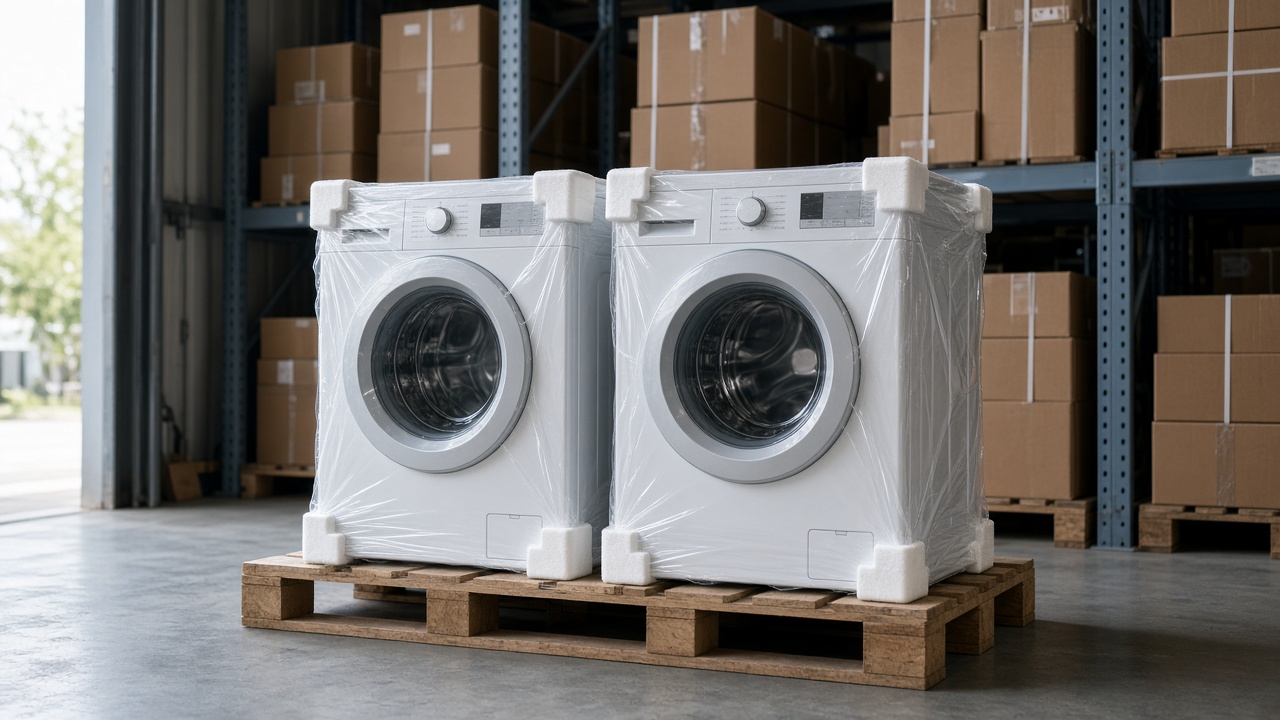
Laundry is the exception. The same BLS table has laundry equipment up 5.8 percent year over year and up 2.8 percent in August alone. Washers and dryers are steel boxes with imported motors and pumps; they were first to the 50 percent metal tariff, the inventory cushion ran out sooner, and the price went through. If the machine you need is a washer, waiting has already cost you, and the trend is not in your favor. If it is anything else, the register still says last year.
Underneath everything, not just laundry, the direction is changing. Seasonally adjusted, the major appliances index fell in June and July and rose 1.4 percent in August, its largest monthly increase since May's 2.1 percent. Two up months out of four is not a trend, but it is what the front edge of a list-price increase reaching the shelf looks like. A 1.9 percent year-over-year discount disappears with two more months like August.
Why Black Friday is the wrong answer this year
Standard advice, and it is standard because it is usually right, is that the deepest appliance discounts of the year come around Black Friday and the weeks either side of it, when retailers run their biggest promotions and clear prior-year models. The advice assumes a stable base price to discount from. This year the base is moving. A 20 percent Black Friday discount off a list that has absorbed an 8 percent increase, the midpoint of what manufacturers announced this summer, is about a 14 percent discount off the price you would pay today, and by late November the year-over-year discount in the index may well be gone.
| Scenario | Sticker | Discount | You pay | Versus today's shelf price |
|---|---|---|---|---|
| Buy a floor model or last year's line today | $1,000 (pre-increase inventory) | 0% to 10% negotiated | $900 to $1,000 | Baseline |
| Black Friday at 20% off a list that absorbed an 8% increase | $1,080 | 20% | $864 | About 14% off today's list, roughly even with a negotiated floor model |
| Black Friday at 20% off, but discounting a further 12% (top-end) increase | $1,120 | 20% | $896 | About 10% off today's list |
| Wait for Black Friday on a washer or dryer (already +5.8%) | $1,058 and rising | 20% | $846 | Roughly even with buying now, with two more months of increases still to land |
That does not mean Black Friday will be bad. It means the "deal" will be measured against a higher sticker, and the person who bought a discounted floor model in October off a pre-increase list will have done at least as well with none of the crowd. In a normal year the calendar sets the window. In a year when the manufacturer has raised prices into a slump, the slump sets it, and the slump is now. (We have a whole piece on how Black Friday became a six-week event and what that does to the word "deal.")
How to buy into it
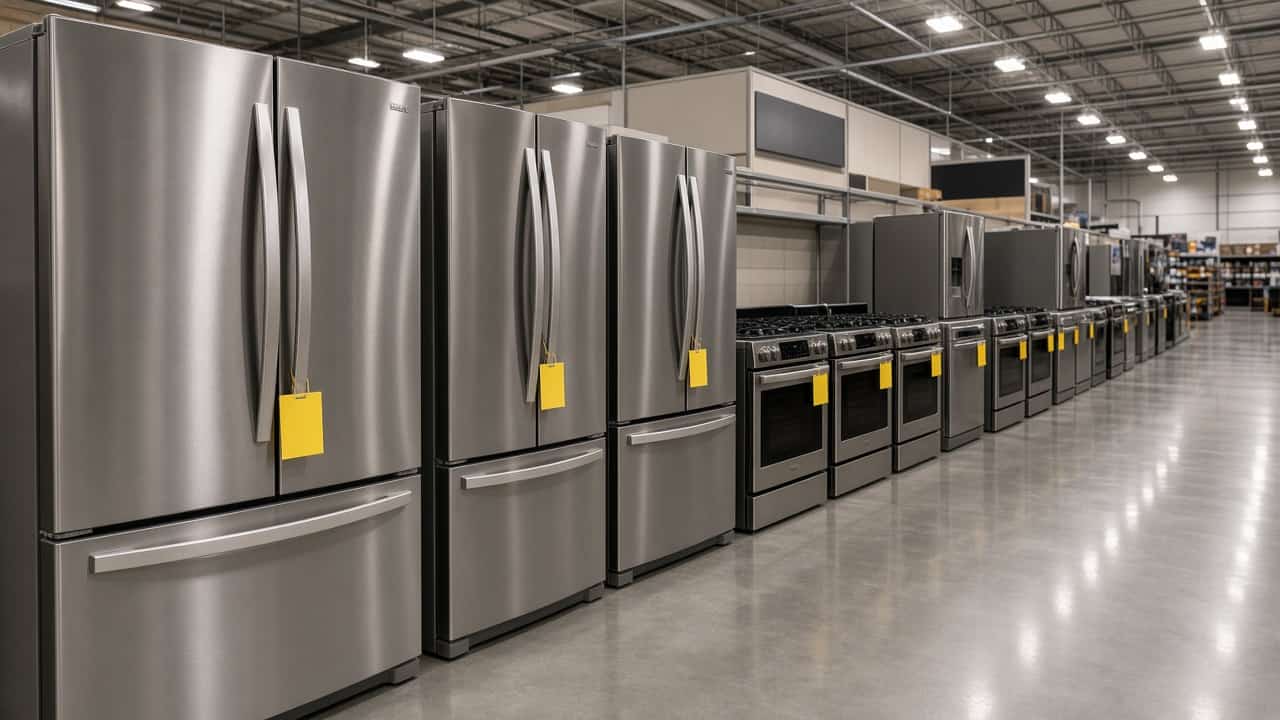
Ask for the floor model and last year's model by name. Retailers are sitting on inventory they bought before the June increases, and that inventory is where the 1.9 percent lives. A unit with a different model number and the same capacity is the same appliance to your kitchen and a different problem to the store.
Weight the brands by exposure. Whirlpool builds most of what it sells in the U.S. and puts its own tariff hit at about 5 percent of North American sales; imported European brands pay the flat 25 percent on the whole unit. LG and Samsung assemble many machines in Tennessee and South Carolina from imported parts, which puts them in between. None of this makes one brand a bargain, but it tells you whose next price increase is smaller.
Skip the store financing this fall. The Fed raised rates on September 16, and promotional appliance credit reprices faster upward than it ever does downward. A discounted appliance on a store card charging close to 30 percent is not a discount.
Do the repair math before you shop at all. Whirlpool noted that repair demand stayed strong while sales fell, which is what a market does when new prices rise. Parts have risen too, 12 to 25 percent since early 2025 by one repair shop's accounting, so repair is not the bargain it was either, but on a machine under ten years old a repair at a third of replacement cost still wins, and the tariff has moved the replacement side of that ratio more than the parts side. If the appliance is part of a bigger project, the kitchen remodel cost breakdown shows where the appliance line sits in the budget and where the rest of the money goes.
The short version
Refrigerators, dishwashers and ranges are priced below last year on the shelf while the list prices behind them are up 3.5 to 12 percent, because the industry is in a slump and retailers are clearing pre-increase inventory. Buy those now if you need them, from the floor or from last year's line, and pay cash. Washers and dryers already turned, so buy on need rather than timing. And treat Black Friday as what it will be this year: a percentage off a sticker that has already gone up.
The government publishes the answer to "did prices go up yet" in the second week of every month, in a table most shoppers never see. For appliances, the answer in September's release was no. The next one, with September's shelf prices in it, comes out October 14. Read it before you assume the answer is still no. The appliances desk will read it the same morning.
Frequently asked questions
When is the best time to buy appliances in 2026?
Now, for refrigerators, dishwashers, and ranges. The August 2026 CPI puts major appliance shelf prices 1.9 percent below a year ago despite 3.5 to 12 percent manufacturer list increases this summer, because a demand slump has retailers discounting inventory bought at pre-increase prices. The index rose 1.4 percent in August, its largest jump since May, so that discount is likely to close over the next two to three months.
Will appliance prices go up because of tariffs?
They already have at the manufacturer level and are starting to at the shelf. Imported steel and aluminum carry a 50 percent tariff, imported finished appliances carry a flat 25 percent duty since April 2026, and ASKO, GE, KitchenAid, LG, Whirlpool, and Bosch raised list prices 3.5 to 12 percent between June 1 and August 1. Laundry equipment is already up 5.8 percent year over year at retail. Other categories are still below last year because retailers are clearing old inventory into weak demand.
Is Black Friday a good time to buy appliances in 2026?
Less good than usual. A 20 percent Black Friday discount off a list price that has absorbed an 8 percent increase is about 14 percent off today's price, and the 1.9 percent year-over-year discount in the CPI may be gone by late November. A negotiated floor model or last year's model bought in October off pre-increase inventory will likely match or beat the Black Friday price without the crowd.
Should I wait to buy a washer and dryer?
No. Laundry equipment is the one category where the tariff has already reached the shelf: up 5.8 percent year over year and 2.8 percent in August alone, per BLS. Washers and dryers were first to the metal tariff and their pre-increase inventory ran out sooner. Buy on need, not timing, because the trend is still upward.
Which appliance brands are least affected by tariffs?
Whirlpool builds most of what it sells in the U.S. and estimates its tariff hit at about 5 percent of North American sales. LG and Samsung assemble many units in Tennessee and South Carolina from imported parts, placing them in the middle. Imported European brands pay the flat 25 percent duty on the entire unit. None of that makes a brand cheap today, but it indicates whose next price increase will be smaller.
Is it cheaper to repair or replace an appliance in 2026?
Repair, more often than before. Replacement prices have risen faster than parts prices, even though parts are up 12 to 25 percent since early 2025. On a machine under ten years old, a repair costing a third or less of replacement still wins. Whirlpool itself noted repair demand stayed strong while new-unit sales fell.