Key Takeaway
- The three-peak mountain snowflake is a pass-fail test for snow acceleration only. It does not test braking, cornering, or ice, which is how a Michelin CrossClimate2 and a Bridgestone Blizzak wear the same badge and stop 15 feet apart on snow.
- On snow, the best all-weather tire (Bridgestone WeatherPeak, 58.6 feet from 25 mph) stopped within 2.5 feet of the best winter tire and beat three of five dedicated winter tires. The CrossClimate2 needed 72.4 feet. Plain all-seasons needed 81 to 85.
- On ice, winter tires keep a 12-to-14-foot lead over the best all-weather tire from just 12 mph. If your winter includes black ice on a hill, that column decides it: buy winter tires.
- In the rain, winter tires came last. From 50 mph the Michelin X-Ice Snow needed 129 feet, 36 more than the Vredestein Quatrac. Bridgestone says not to run the Blizzak once temperatures consistently top 45 degrees, which describes much of winter in most of the country.
- A second set of winter tires on their own wheels costs roughly $200 a year, or about $100 if you swap them yourself. Buy them for lake-effect, mountain, or rural-plow-last driving. For cold rain with a handful of snow days, buy the specific best all-weather tire and stop at one set.
In Tire Rack's 2026 head-to-head, the best all-weather tire stopped within three feet of the best winter tire on snow. The winter tires then needed up to 36 more feet to stop in the rain. Where you live decides which gap you can live with.
Every October the tire shops run the same two-sided pitch: the winter tire is the safe choice, and the all-weather tire with the little mountain-snowflake on the sidewall is the convenient one. Both halves are true and neither is useful, because the interesting question is how big the gap is and in which direction. This spring Tire Rack put the all weather tires vs winter tires argument on its own track, ten tires in one size on one 2025 Camry in near-freezing weather, and measured it. The results are more lopsided than the pitch in both directions. On snow, one all-weather tire nearly caught the winter specialists. On ice, the winter tires kept a lead close to a car length. And in the rain, which is most of what winter is in most of the country, the winter tires came last.
The snowflake is a pass-fail test for one thing
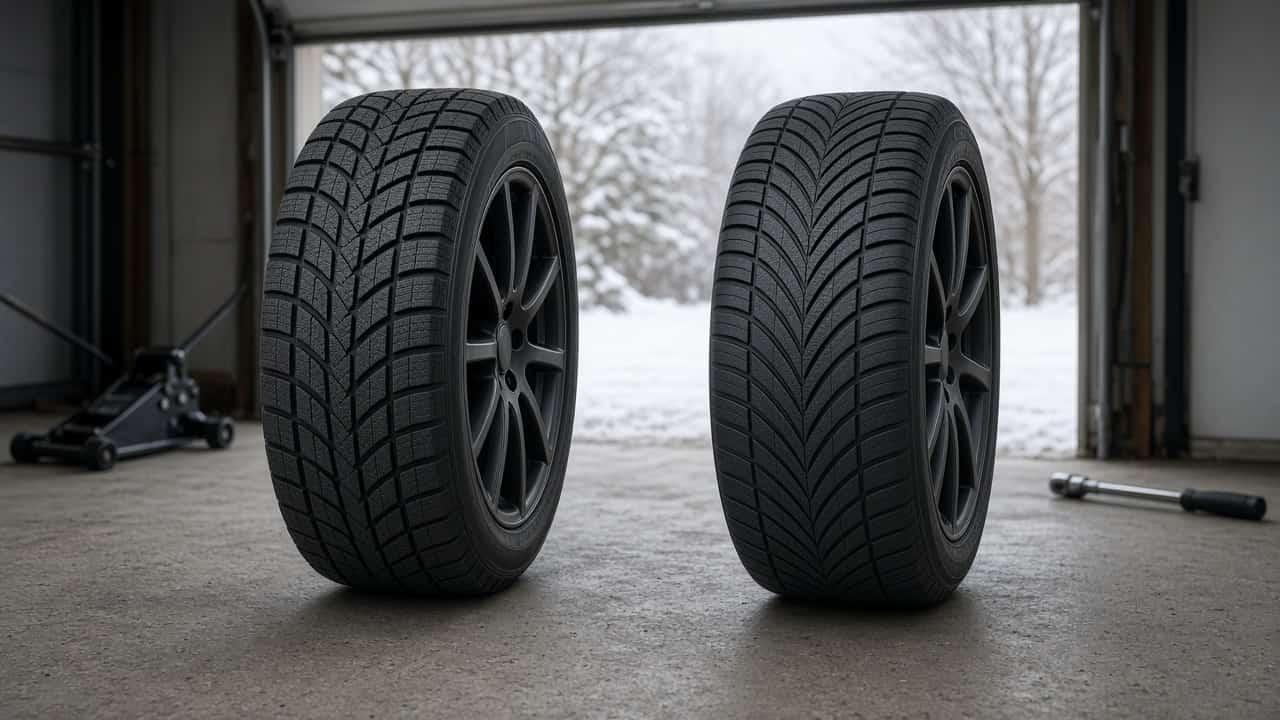
Start with the symbol, because it is doing more marketing work than it earned. The three-peak mountain snowflake is a 1999 industry standard: a tire gets it by accelerating on medium-packed snow at least 10 percent better than a reference tire in a standardized test. That is the whole exam. Braking on snow is not tested. Cornering is not tested. Ice is not tested. Every winter tire carries the symbol, and so do the all-weather tires, which is how a Michelin CrossClimate2 and a Bridgestone Blizzak end up with the same badge and, as you are about to see, a 15-foot difference in how far they slide.
On snow, the best all-weather tire nearly caught the winter tires
Here is the test, in feet, on a 215/55R17 tire. Snow braking is from 25 mph, ice braking from 12 mph, wet braking from 50 mph. Lower is better everywhere.
| Tire | Category | Snow stop (ft) | Ice stop (ft) | Wet stop (ft) |
|---|---|---|---|---|
| Michelin X-Ice Snow | Winter | 56.1 | 39.4 | 129.0 |
| Bridgestone Blizzak WS90 | Winter | 57.3 | 38.7 | 117.6 |
| Bridgestone WeatherPeak | All-weather | 58.6 | not reported | 110.7 |
| Continental VikingContact 8 | Winter | 59.3 | 43.3 | 117.8 |
| General Altimax Arctic 12 | Winter, unstudded | 61.1 | 45.9 | 122.4 |
| Vredestein Wintrac Pro+ | Performance winter | 63.1 | not reported | 100.2 |
| Michelin CrossClimate2 | All-weather | 72.4 | 53.0 | 99.6 |
| Vredestein Quatrac | All-weather | 73.0 | 50.6 | 93.0 |
| Michelin Primacy Tour A/S | All-season | 81.1 | 57.7 | 99.3 |
| Michelin Defender2 | All-season | 84.5 | 55.0 | 111.0 |
The snow column is the surprise. The WeatherPeak, an all-weather tire Bridgestone positions under its own Blizzak, stopped in 58.6 feet, two and a half feet behind the best winter tire in the test and ahead of three of the five dedicated winter tires. The CrossClimate2, the tire most people mean when they say all-weather, needed 72.4 feet, a 16-foot penalty. The two plain all-season tires needed 81 and 85 feet, which is the number that should scare you: 28 feet past the winter tire from a speed you use in a parking lot. Tire Rack's own extrapolation is that at 50 mph the first-to-last spread on snow is more than 100 feet, the length of an intersection.
So the category label is not the variable. The specific tire is. Two all-weather tires with the same snowflake were 14 feet apart on the same snow.
Ice is where the winter tires keep their lead
The ice column does not have a WeatherPeak-style surprise in it. The winter tires stopped from 12 mph in 38.7 to 45.9 feet. The all-weather tires took 50.6 and 53. The all-seasons took 55 and 57.7. That is a 12-to-14-foot gap between the best all-weather tire and the best winter tire from a walking-pace speed, and ice is the one surface where a lead like that is the difference between a stop and a fender. Bridgestone's studless compound is built to wick the water film off ice; an all-weather tread compound is built to survive July, and it shows.
If your winter includes black ice on a hill you cannot avoid, the ice column is the only column that matters, and it says winter tires. Tire Rack's summary says it in one sentence: on snow and ice there is no substitute for a dedicated winter tire.
The rain is where winter tires lose, and it rains more than it snows
Now read the wet column, which is the one every "winter tires are safer" pitch leaves out. From 50 mph on wet pavement the X-Ice Snow needed 129 feet, 36 feet more than the Quatrac and 29 more than the CrossClimate2. The Blizzak needed 18 more feet than the CrossClimate2. The soft compound that grips ice at 20 degrees is mush at 45 degrees in a downpour, which is why Bridgestone's own listing says not to run the Blizzak once temperatures consistently top 45. In a large part of the country, that describes November, most of March and a good share of the days in between.
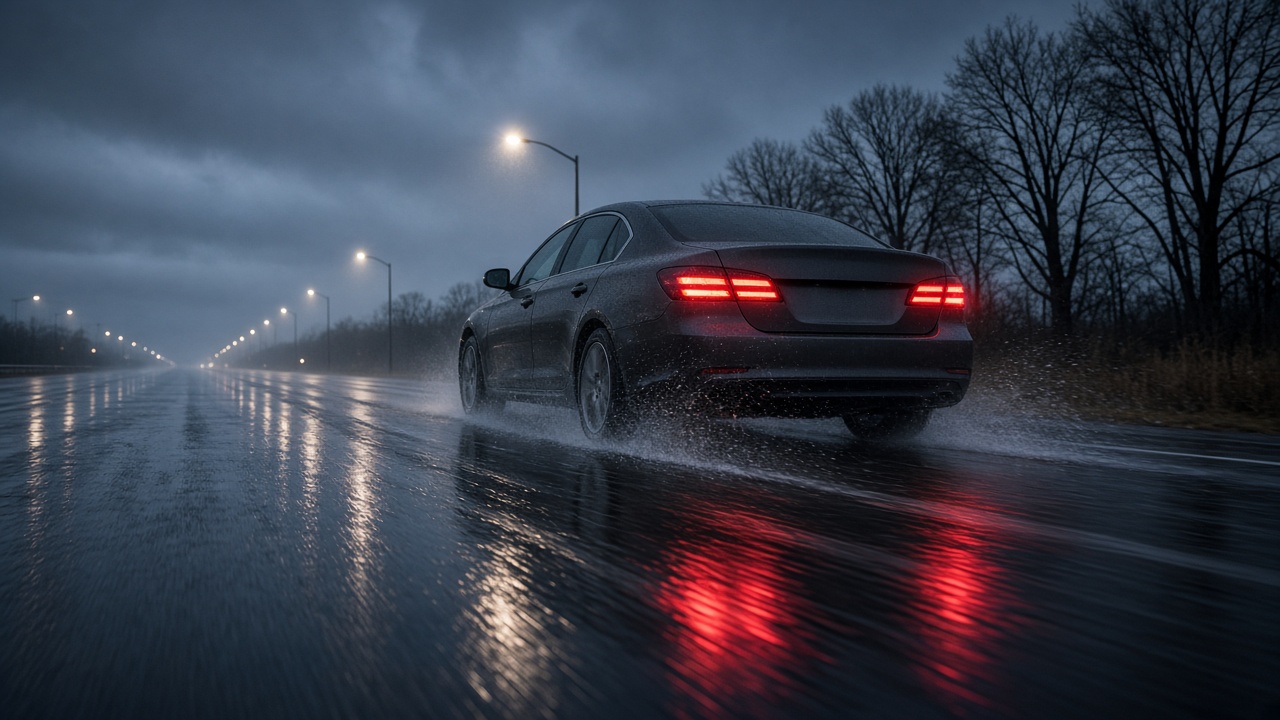
A winter tire is therefore not a "safer tire." It is a tire that is safer on the days it snows and less safe on the days it rains, and the honest way to choose is to count your days. Lake-effect country, a mountain commute, a rural road the plow reaches last: those are snow-and-ice counties, and the ice column wins. A metro where the plows salt everything by 6 a.m. and the roads spend the winter wet and 38 degrees: that is a rain county, and the best all-weather tire is the safer choice on more days than a Blizzak is.
The two-set math runs about $200 a year
The money is the other half of the argument, and it is less dramatic than the sticker suggests. A CrossClimate2 in the test size lists at $216 at Discount Tire with a 60,000-mile warranty. A Blizzak WS90 runs $155 to $175 in common 16- and 17-inch sizes and carries no mileage warranty at all, though one Tire Rack owner review reports 20,000 miles with tread to spare.
Run it for a car that drives 12,000 miles a year, 5,000 of them in winter. One all-weather set costs about $960 mounted and lasts the warranty's five years: roughly $190 a year. Adding a winter set on its own steel wheels with tire-pressure sensors, at $165 a tire, $90 a wheel and $50 a sensor, is about $1,300 up front. Spread over five winters for the tires and ten years for the hardware, plus two $50 shop swaps a year, and then credit the all-weather set for lasting three extra years because it only drives summers, the winter set adds roughly $200 a year. Swap them yourself in the garage and skip the sensors, and it is closer to $100. That is the real price of the ice column: two hundred dollars a year, not a thousand.
| Setup | Up-front cost | Annualized cost | Notes |
|---|---|---|---|
| One all-weather set (CrossClimate2, 215/55R17) | About $960 mounted | About $190/year | 60,000-mile warranty, roughly five years at 12,000 miles |
| Add winter set on steel wheels with TPMS, shop swaps | About $1,300 | Adds about $200/year | Two $50 swaps a year; all-weather set lasts three extra years |
| Add winter set, swap yourself, no sensors | About $1,000 | Adds about $100/year | Requires a jack, torque wrench, and a Saturday |
Where you buy matters less than which tire you buy, though our Costco Tire Center review covers the tradeoffs of the cheapest mounting in town. And if you are already paying for two swaps a year, that is the right moment to check whether the car needs an alignment, because uneven wear will eat a $216 tire faster than any compound choice.
Which one to buy
Regular snow or ice, meaning lake-effect roads, a hill the plow reaches last, a mountain commute: buy winter tires and put them on their own wheels. The ice numbers are not close, the cost is about $200 a year, and no all-weather tire in this test stopped on ice within ten feet of the best winter tire.
Cold rain with a handful of snow days: buy the best all-weather tire and stop at one set. Buy the specific tire, not the category. In this test the WeatherPeak was a winter tire on snow and a touring tire in the rain, while the CrossClimate2 gave up 14 feet of snow braking to gain 11 feet of wet braking against it. Check the test tables for your size before you assume the snowflake did the work.
A plain all-season tire with no snowflake, north of the Ohio River: that driver is the one this test was written about. Twenty-eight feet.
Winter tires are the right answer to a question about ice. Most people are asking a question about rain. The automotive desk will keep running the tests so you can keep asking the right one.
Frequently asked questions
Are all-weather tires as good as winter tires in snow?
The best one nearly is. In Tire Rack's 2026 test on a 215/55R17, the Bridgestone WeatherPeak stopped from 25 mph on snow in 58.6 feet, 2.5 feet behind the best winter tire (Michelin X-Ice Snow, 56.1) and ahead of three of five dedicated winter tires. But the Michelin CrossClimate2, another all-weather tire with the same snowflake symbol, needed 72.4 feet. The specific tire matters far more than the category label.
Do all-weather tires work on ice?
Not as well as winter tires, and the gap is consistent. From 12 mph on ice, winter tires stopped in 38.7 to 45.9 feet; the all-weather tires took 50.6 to 53 feet; plain all-seasons took 55 to 57.7. That 12-to-14-foot deficit between the best all-weather and best winter tire is a car length at walking pace. If your winter includes unavoidable ice, buy winter tires.
Are winter tires bad in the rain?
Compared to all-weather tires, yes. From 50 mph on wet pavement the Michelin X-Ice Snow needed 129 feet, 36 more than the Vredestein Quatrac (93) and 29 more than the CrossClimate2 (99.6). The Blizzak WS90 needed 117.6. The soft ice compound loses grip in the warm rain, which is why Bridgestone says not to run the Blizzak once temperatures consistently exceed 45 degrees.
What does the three-peak mountain snowflake symbol mean?
It certifies one thing: the tire accelerates on medium-packed snow at least 10 percent better than a standardized reference tire. Snow braking, cornering, and ice performance are not tested. Both dedicated winter tires and all-weather tires carry it, so the symbol alone cannot tell you how a tire stops.
How much does a second set of winter tires cost per year?
About $200 a year for a typical 12,000-mile-a-year car, including tires at $165 each, steel wheels at $90, tire-pressure sensors at $50, two $50 shop swaps annually, and credit for the all-weather set lasting longer because it only drives summers. Swap them yourself and skip the sensors and it drops to roughly $100 a year.
Should I buy all-weather or winter tires?
Count your days. Lake-effect snow, mountain commutes, or rural roads the plow reaches last: winter tires on their own wheels. Cold rain with a handful of snow days, which describes most U.S. metros: the best all-weather tire in your size, one set. Either way, replace plain all-season tires without the snowflake if you live north of the Ohio River; they needed 28 more feet to stop on snow than the winter tires from just 25 mph.