Key Takeaway
- Approved homeowners rate increases fell from 13.6 percent in 2024 to 6.3 percent in 2025 to 1.8 percent through July 2026, per S&P Global. If your renewal jumped double digits, most of it did not come from the filed rate.
- The filed rate is public. Search your carrier on your state's SERFF Filing Access portal, open the filing, and read the Rate Information page. That number is the industry's answer; the gap between it and your bill is explained by three non-rate levers.
- Lever one: the inflation guard endorsement raises your dwelling limit 4 to 8 percent a year, and premium scales with it. Check the carrier's replacement cost estimate against a local builder's number instead of letting it compound.
- Lever two: the policy got worse. Among the ten largest insurers, actual-cash-value roof schedules went from 10 percent of policies to 60, and percentage wind/hail deductibles from 60 to 90 percent. A 1 percent deductible on a $400,000 house is $4,000, not the $1,000 you think you have.
- Lever three: tiering by roof age and home age moves the same house to a pricier shelf every year. The cheapest fix is verifying the roof year on your declarations page, which carriers routinely fail to update even after paying to replace it.
Approved rate increases fell to 1.8 percent this year, from 13.6 percent in 2024. If your renewal jumped anyway, the money moved through three other doors, and the filing that explains it is public.
The homeowners insurance industry has, by its own accounting, nearly stopped raising rates. S&P Global Market Intelligence tracks approved rate changes across the country, and its tally went from 13.6 percent in 2024 to 6.3 percent in 2025 to 1.8 percent through July of this year. Renewal notices did not get the memo. So the question people type into a search box every month, why did my homeowners insurance go up, has a boring answer sitting in a state database and three less boring ones sitting on your own declarations page. The boring one takes ten minutes to look up. The other three are where the money went.
The rate you can look up is not the number that moved your bill
Every rate change a carrier wants to charge in your state has to be filed with the state insurance department, and many departments post those filings free through a system called SERFF Filing Access (the rest will pull one on request). Search your carrier's name and homeowners line, open the PDF that matches the filing number, and scroll to the page labeled Rate Information. Georgia's insurance office spells out where the overall percentage rate impact is printed; every state's version looks about the same. That page is the industry's number. In a lot of states this year it is small: Minnesota and Colorado, which took increases of roughly 18 and 17 percent in 2025, are running around 1.6 and 0.8 percent in 2026. North Carolina is still climbing, and California's insurer of last resort announced a 29.1 percent increase for this fall, so the national 1.8 is an average of very different places.
| Year | Approved homeowners rate change (S&P Global, national) |
|---|---|
| 2024 | 13.6% |
| 2025 | 6.3% |
| 2026 (through July) | 1.8% |
S&P's own note explains the gap between that page and your bill. The slowdown, it says, is the byproduct of "broad-based, non-rate actions": higher deductibles, rate tiering by property age and condition, and pickier risk selection. In plain English, carriers finished catching up on price and started changing the product. If your filed rate change is 2 percent and your premium rose 15, the other 13 came from one of the three levers below. (How the price got this high in the first place is a separate story, told in why homeowners insurance is so expensive.)
Lever one: your coverage went up because rebuilding got more expensive
Most policies carry an inflation guard endorsement, ISO form HO 04 46 or a company version of it, that raises your dwelling limit by a set percentage every year, typically 4, 6 or 8 percent, and raises other-structures, contents and loss-of-use limits along with it. The premium scales with the limit. Insure a $400,000 house at 6 percent and next year's declarations page says $424,000, which alone pushes the bill up about 6 percent before any rate change is applied. Stack the 1.8 percent rate on top and you are at roughly 8 percent with nothing about your risk having changed.
The endorsement exists for a reason. Rate Insurance's 2026 market study puts the average cost to rebuild at $478,000, up 40.7 percent in five years, and adds that the automatic adjustments in most policies have not kept pace. The right response is not to strip the guard out; it is to check the number it produced. Ask your agent for the replacement cost estimate the carrier used, compare it to what a local builder would charge per square foot, and set Coverage A to the estimate rather than to a number that has been compounding since you bought the house. Most people find the limit is either years behind or padded above what the house would cost to replace, and both are fixable at renewal.
Lever two: the policy got worse at the same price
This is the lever nobody's renewal notice explains in a sentence. ZestyAI, an insurance analytics firm, read more than 2,000 homeowners filings from 60-plus carriers and found that among the ten largest U.S. insurers, actual-cash-value roof schedules went from 10 percent of policies in 2015 to 60 percent in 2025. Percentage deductibles for wind and hail went from 60 percent of policies to 90. Cosmetic-damage exclusions and clauses that let the carrier decline to match undamaged siding or shingles went from 20 percent to 90. The firm's conclusion is that carriers now compete less on headline price and more on how the policy performs at claim time.
| Policy term (ten largest U.S. insurers) | Share of policies, 2015 | Share of policies, 2025 |
|---|---|---|
| Actual-cash-value roof schedule | 10% | 60% |
| Percentage wind and hail deductible | 60% | 90% |
| Cosmetic-damage exclusion or no-matching clause | 20% | 90% |
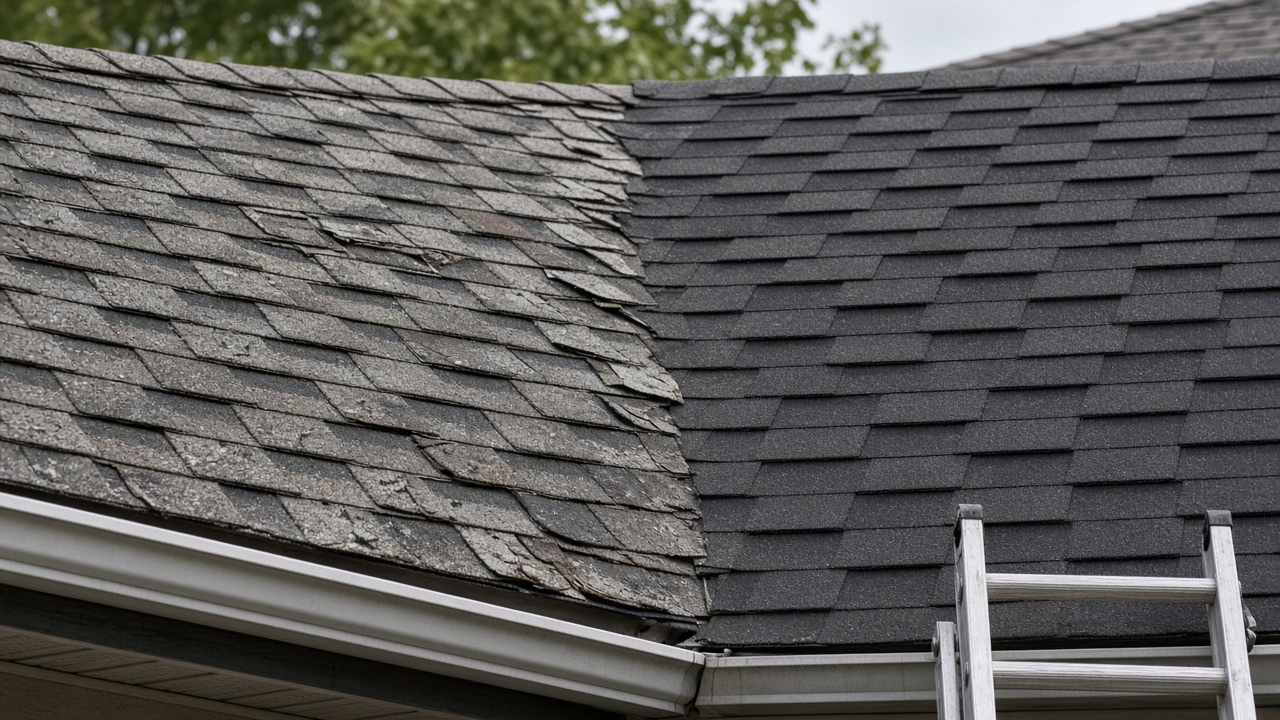
Those changes ride in on your renewal as endorsements, and they are worth real money to you even when the premium barely moves. An Ohio agents' association keeps a carrier-by-carrier sheet: one regional insurer starts depreciating roof claims at ten years, switches the policy to a limited loss settlement schedule at year eleven, sells replacement cost back through year nineteen, and sets its wind and hail deductible at $2,500, $5,000 or $10,000 depending on your dwelling limit and roof age, with the changes landing at new business and at renewal. Another pays roof wind and hail losses on a schedule keyed to the installation year printed on your declarations. On a $400,000 house, a 1 percent wind and hail deductible is $4,000 against the $1,000 flat deductible you probably think you have; in Texas, 2 percent is now the standard and some carriers are at 3. A flat premium next to a deductible that quadrupled is a rate increase that never had to be filed as one. It is the same quiet narrowing that leaves people surprised when they learn what the policy does to a foundation claim.
Lever three: you got moved to a different shelf
The third lever is tiering. Carriers now price by roof age and home age as rating variables, so the same house drifts into a more expensive tier every year without anyone doing anything. Discounts age out the same way: one large insurer says plainly that its roof and home age discounts shrink as those things get older, and a single claim can strip a claims-free discount for years. In most states a slip in your credit-based insurance score does the same job. And an insurer that has too many houses in your ZIP code will raise rates there to thin its own exposure, which has nothing to do with your house at all.
The most common tiering error is also the cheapest to fix. Advisers who read a lot of policies keep finding roofs that the carrier itself paid to replace and then never updated on the declarations page, so the house is priced and settled as if it still had the old roof. The roof year on that page is worth checking every single year.
What actually lowers the number
Pull the filing, then do these in order. Correct the roof year and any other fact on the declarations page that is wrong; a new roof can move both the tier and the deductible. Set Coverage A to a current replacement estimate instead of the compounded one. Price a higher flat deductible, which is a choice you make once, and refuse a percentage wind and hail deductible you did not ask for, which is a choice the carrier made for you. Ask for the buy-back that restores replacement cost on the roof if your policy picked up a schedule; some carriers sell it, and the Ohio one above does through year nineteen. Then shop, through an independent agent who can see a dozen carriers, because a market S&P describes as fragmented and state by state means the same house now prices very differently across companies in the same town.
Bundling and credit help at the margin. The three levers above are where the double digits live, and the filing that proves it is free. If the renewal came with something worse than a price, a non-renewal or cancellation, the rules are different and state-specific; we have walked through them for Ohio and Florida.
The renewal notice is a legal document, not a bill
The reason this feels like a bill you cannot argue with is that it arrives formatted like one. It is a contract offer, the filed rate is a public record, and every endorsement on it was approved somewhere you can read. Treat the renewal as the one day a year the carrier has to show its work, and the question of why the price went up stops being rhetorical. The answer has a page number. The insurance desk keeps reading the filings so you have to read fewer of them.
Frequently asked questions
Why did my homeowners insurance go up if rates barely changed?
Because most of the increase came through non-rate channels. S&P Global's tally of approved rate changes fell to 1.8 percent through July 2026, but carriers shifted to what S&P calls "broad-based, non-rate actions": inflation guard endorsements that raise your dwelling limit 4 to 8 percent a year (premium scales with it), policy changes like percentage wind/hail deductibles and actual-cash-value roof schedules, and tiering by roof and home age that moves the same house to a pricier bracket every year.
How do I find out how much my insurance company raised rates in my state?
Search your state insurance department's SERFF Filing Access portal for your carrier's name and homeowners line, open the PDF for the relevant filing, and go to the page labeled Rate Information, which prints the overall percentage rate impact. States that do not post filings publicly will pull one on request. Compare that number to your actual premium change; the difference is coming from coverage limits, endorsements, or tiering.
What is an inflation guard endorsement?
An endorsement (ISO form HO 04 46 or a carrier equivalent) that automatically raises your dwelling coverage limit by a fixed percentage each year, typically 4, 6, or 8 percent, and raises other-structures, contents, and loss-of-use limits with it. On a $400,000 house at 6 percent, next year's limit is $424,000 and the premium rises about 6 percent before any rate change. Keep the endorsement but verify the resulting limit against a current local rebuild estimate; the average U.S. rebuild cost is now $478,000, up 40.7 percent in five years.
What is a percentage wind and hail deductible?
A deductible for wind and hail claims set as a percentage of your dwelling limit rather than a flat dollar amount. On a $400,000 house, a 1 percent deductible is $4,000; in Texas 2 percent is standard and some carriers use 3, which is $12,000. Among the ten largest insurers, percentage wind/hail deductibles rose from 60 percent of policies in 2015 to 90 percent in 2025. They often arrive as renewal endorsements without a premium change, which is effectively a rate increase that never had to be filed.
How can I lower my homeowners insurance premium?
In order: correct the roof year and any wrong facts on your declarations page (carriers often fail to update a roof they paid to replace); set Coverage A to a current replacement estimate instead of the compounded inflation-guard number; choose a higher flat deductible but refuse a percentage wind/hail deductible you did not ask for; ask for the roof replacement-cost buy-back if your policy moved to a schedule; then shop through an independent agent who can quote a dozen carriers, since the same house prices very differently across companies in the same town.