Key Takeaway
- The 3,000-mile rule is a marketing relic. CalRecycle, California's own recycling agency, says it is out of date and most cars can run 5,000, 7,500, 10,000, or even 15,000 miles between changes.
- For a car you barely drive, time replaces mileage. Manufacturer schedules read "X miles or 12 months, whichever comes first," and a low-mileage driver hits the months first. For many cars that means once a year.
- The hidden catch is how you drive those miles. Repeated short cold trips are severe service. Toyota cuts the interval to 5,000 miles for that pattern, with no requirement that you drive a lot.
- If your car has an oil-life monitor, trust it over any sticker or rule of thumb, but still cap it with the manual's calendar limit on a car you rarely start.
- Practical answer: once a year for normal, warmed-up trips on synthetic oil, and about twice a year if every drive is a short cold hop.
California's own recycling agency says the 3,000-mile oil change is out of date. For a car that barely leaves the driveway, the real answer is even simpler.
The little sticker in the corner of your windshield is lying to you, or at least working from a script written in the 1970s. It tells you to come back in 3,000 miles, and for a low-mileage driver that can mean changing perfectly good oil twice a year on a car that has barely turned 2,000 miles. So the honest question of how often to change oil if you barely drive has almost nothing to do with the odometer. It has to do with the calendar, and with one detail about how you drive that most quick-lube counters never ask about.
The 3,000-mile rule is a marketing relic
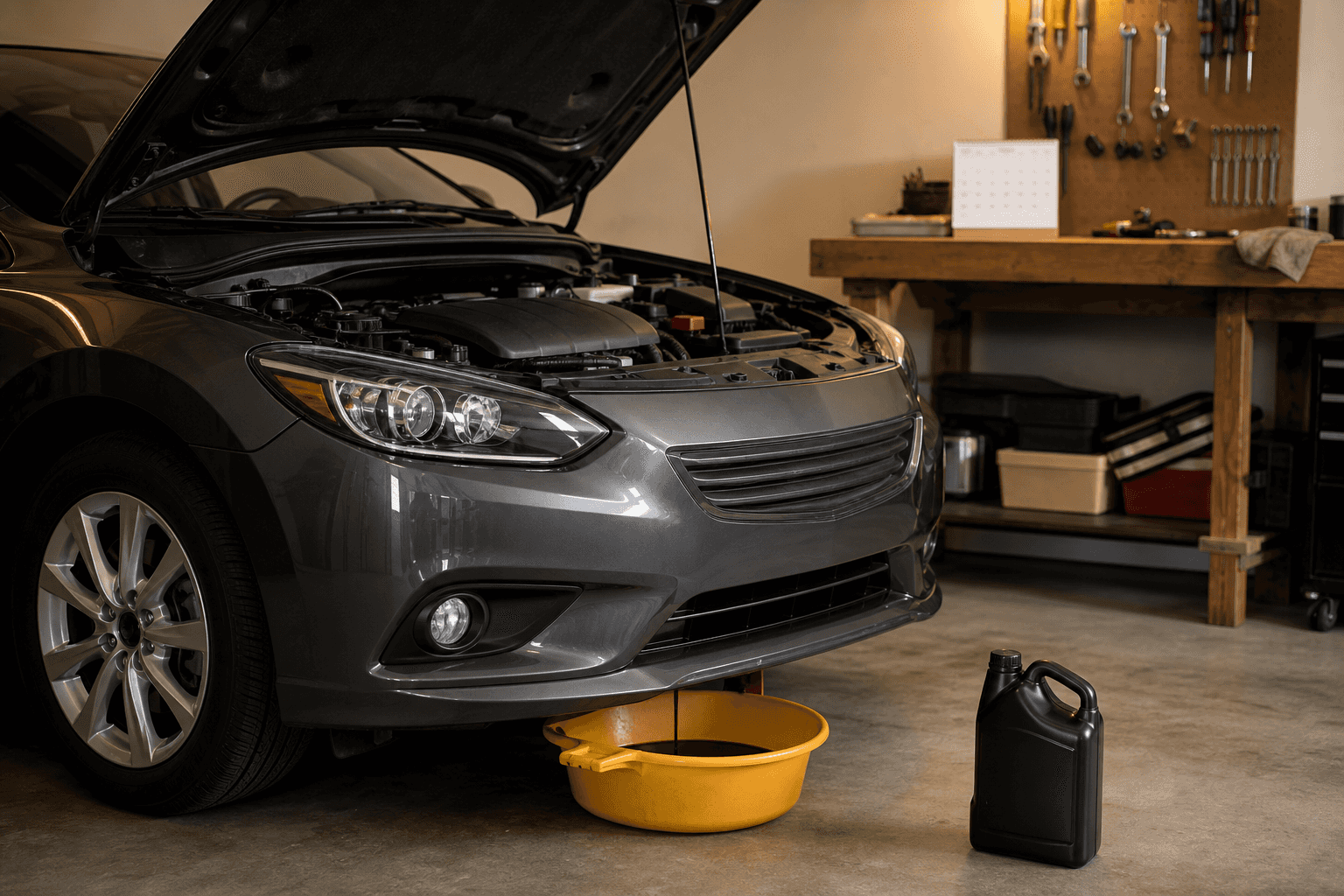
A 3,000-mile interval made sense when oil was simpler and engines were looser, back when a Pinto's crankcase turned motor oil to sludge in a season. Oil chemistry and engine tolerances have moved on. The state of California got tired enough of the myth that its recycling agency, CalRecycle, runs a campaign telling drivers the opposite. Its position is blunt: the 3,000-mile standard is out of date and does not apply to most cars, many of which can run 5,000, 7,500, 10,000, or even 15,000 miles between changes.
The waste is not trivial. A CalRecycle survey found that close to 10 million Californians were changing their oil every 3,000 miles or less, pouring money and used motor oil down the drain for no engineering reason. Lawmakers noticed. In 2016 a state senator pushed a bill, SB-778, that would have required oil-change shops to recommend the interval printed in your owner's manual instead of the reflexive 3,000-mile sticker. It passed the legislature and then got vetoed, so it never became law. The reflex it targeted is still alive at every counter that hands you a sticker on the way out.
Companies still pushing the short interval are the ones who profit from the extra visits. Most automakers walked away from 3,000 miles years ago. The majority now call for 7,500 or 10,000 miles under normal driving, and a few approve 15,000 on full synthetic.
The cost of believing the sticker is real money. A full synthetic oil change runs roughly $60 to $85 at a dealer, and a barely-driven car put on a twice-a-year schedule burns $120 to $170 annually to replace oil that still has thousands of miles of life in it. Spread that across a decade of light driving and the myth has quietly cost more than a set of tires.
For a low-mileage car, time replaces mileage
Here is the part that actually answers the question for someone who drives very little. Oil does not only wear out from friction and miles. It degrades over time on its own, picking up moisture, fuel, and combustion acids, and oxidizing whether the car is on the highway or sitting in a garage. That is why every maintenance schedule is written as a pair: so many miles or so many months, whichever comes first. If you barely drive, you will almost always hit the months long before the miles.
Look at what a manufacturer actually specifies rather than what a sticker says. Toyota tells owners of its 0W-20 synthetic engines to change the oil every 10,000 miles or 12 months, whichever comes first. A driver covering 3,000 miles a year never sees the 10,000-mile trigger, so the rule that governs them is the 12-month one. Once a year. Not twice, not every 3,000 miles. Other automakers land in the same neighborhood, with General Motors advising at least once a year regardless of distance. The calendar is the real deadline for a low-mileage car, and for many of them that calendar reads about a year.
This is where the dealer's "every six months no matter what" pitch falls apart for a garaged commuter car that mostly does longer trips. Six months is a conservative default aimed at the worst-case driver. If your manual says twelve, your driving is ordinary, and your oil is synthetic, the manual is the number that protects both your engine and your warranty. If you are weighing whether that synthetic premium is even worth it for a car that sits, our breakdown of synthetic oil versus conventional oil covers where the longer service life actually pays off.
Barely driving can secretly be severe service
Before anyone extends to a tidy once-a-year schedule, there is a catch, and it is the detail the odometer hides. How you spend those few miles matters more than how many there are. A car that barely drives is often a car that only does short hops: a mile to the store, a few minutes to school pickup, a quick run that ends before the engine ever reaches full temperature.
Those short cold trips are the hardest possible life for motor oil. The engine never gets hot enough to boil off the moisture and unburned fuel that condense inside it, so water and gasoline accumulate and start turning the oil acidic and sludgy. Manufacturers know this. Toyota's own schedule classifies repeated short trips in cold weather, along with extensive idling and towing, as special operating conditions that cut the interval to 5,000 miles. Note what is missing from that severe-service trigger: any requirement that you drive a lot. You can qualify for the tougher schedule while putting almost no miles on the car.
So the low-mileage answer splits in two. If your few miles are mostly longer, warmed-up drives, the yearly time interval is plenty. If your few miles are all short cold hops, treat the car as a severe-service case and change it closer to twice a year, even though the odometer barely moves. The pattern of the driving, not the total, decides it.
Let the car's oil-life monitor make the call
Many vehicles built in the last fifteen years take the guesswork out entirely. They run an oil-life monitor that watches your actual driving, cold starts, trip length, engine load, and temperature, then estimates when the oil is actually spent. It shows up as a percentage or a wrench on the dash. A car driven gently on long trips might stretch well past 10,000 miles before the light asks for service. A short-trip car will see the same light come on sooner, exactly as it should.
If your car has one, that monitor beats both the windshield sticker and any rule of thumb in this article, because it is reading your specific situation instead of an average. The one thing it cannot do is track pure calendar time on a car you almost never start, so pair it with the manual's time limit and change the oil at whichever the car reaches first.
For most people who barely drive, the practical schedule is once a year if your trips are normal and your oil is synthetic, and about twice a year if every drive is a short cold one. Check the maintenance section of your manual for the exact months, follow the dash light if you have one, and let the 3,000-mile sticker peel off the windshield where it belongs. And if you ever have to top off between changes with whatever the gas station sells, our note on mixing synthetic and conventional oil explains why that is a non-event.
Frequently asked questions about oil changes for low-mileage cars
How often should you change oil if you barely drive?
For a car driven very little, time matters more than miles. If your trips are mostly normal, warmed-up drives and you run synthetic oil, once a year is plenty, which matches what manufacturers like Toyota and GM specify. If every drive is a short, cold hop, treat the car as severe service and change the oil about twice a year, even though the odometer barely moves.
Does engine oil go bad if you don't drive?
Yes. Oil degrades over time on its own, not just from friction. It absorbs moisture, fuel, and combustion acids and slowly oxidizes whether the car is driven or parked. That is why every maintenance schedule is written as miles or months, whichever comes first, and a low-mileage car nearly always hits the months first.
Is the 3,000-mile oil change still necessary?
No. CalRecycle, California's recycling agency, calls the 3,000-mile rule out of date, and most automakers now specify 7,500 to 10,000 miles under normal driving, with some approving 15,000 on full synthetic. The short interval mainly benefits the shops that sell the extra visits.
Do short trips require more frequent oil changes?
Yes. Repeated short trips, especially in cold weather, keep the engine from getting hot enough to burn off the moisture and fuel that contaminate the oil, which is why Toyota classifies that pattern as severe service and cuts the interval to 5,000 miles. Crucially, this can apply even if you put very few total miles on the car.