Key Takeaway
- A wheel alignment runs $75 to $200. A front-end (two-wheel) job is $50 to $125, a four-wheel is $100 to $250, and Kelley Blue Book puts the dealership average at $183.
- Most modern cars need the four-wheel job (all-wheel drive or independent rear suspension). Cars with driver-assist cameras cost more, because the sensors are calibrated to the steering geometry.
- Learn the difference between a check (the measurement) and an alignment (the adjustment). Ask for the printout: in-spec numbers mean you keep your money.
- Align on events, not the calendar: new tires, replaced suspension parts, a hard pothole or curb hit, or symptoms like pulling, a crooked wheel, or uneven tread wear.
- Firestone's lifetime alignment (reported $180 to $230, quoted in store) pays for itself by the second visit if you keep the car a long time, live on rough roads, and buy tires regularly.
The service runs $75 to $200, and Kelley Blue Book pegs the dealership average at $183. The more interesting number is how often page one says to buy one, and that number grows the closer you get to the sales counter.
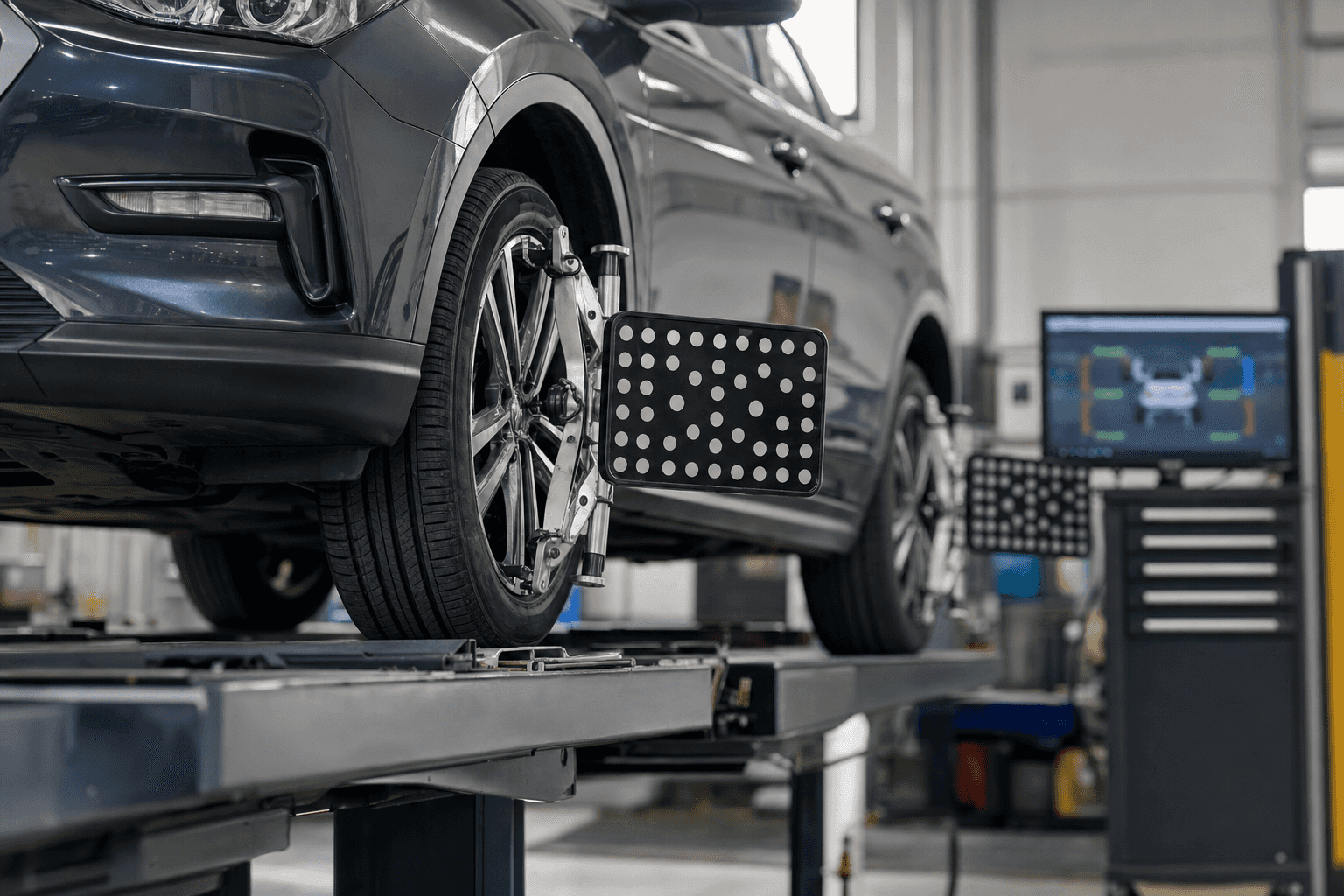
Every page-one answer to how much a wheel alignment costs comes from a business that performs them. Jiffy Lube, Midas, Discount Tire, Big Chief, Milex, a parade of local shops, and Kelley Blue Book as the lone bystander. The pricing they publish is consistent and, by auto-repair standards, honest. A front-end alignment runs $50 to $125. A four-wheel alignment, which is what most modern cars take, runs $100 to $250. Kelley Blue Book's repair data puts the national dealership average at $183, with independent shops a bit under that. The whole job takes 60 to 90 minutes.
So the price question has a boring answer, and the boring answer is fine. The money in this business isn't hiding in the price. It's hiding in the frequency, and the frequency advice gets more aggressive with every step toward the counter.
What a wheel alignment costs by service type
| Service | Typical 2026 price |
|---|---|
| Two-wheel (front-end) alignment | $50 to $125 |
| Four-wheel alignment | $100 to $250 |
| Dealership average (per Kelley Blue Book) | $183 |
| Chain lifetime plan (Firestone, quoted in store) | Reported $180 to $230 |
Which service you need isn't a choice. Anything with all-wheel drive or an independent rear suspension gets the four-wheel job; the cheaper front-end alignment applies mostly to solid-rear-axle trucks and older cars. The spread inside each band comes from local labor rates, the vehicle itself, and one modern wrinkle: cars with driver-assist cameras and radar. Those systems read the road through the steering geometry, so shops sell a pricier safety-system alignment for them, and Firestone notes that even the capability to do one varies by location. If your car brakes for you, expect the top of the range.
One vocabulary note before the numbers below, because the industry blurs it on purpose. A check is a measurement, and shops with modern racks can run one quickly. An alignment is the adjustment, and the adjustment is what costs $100. Keep the two words separate and half the upsell pressure evaporates.
The recommended schedule inflates near the sales counter
Hunter Engineering makes alignment equipment for the shops themselves, which makes it the one company in this story that profits from alignments without selling you one. Hunter's guidance says most vehicle manufacturers recommend an alignment check every 12 months or 10,000 miles. Jiffy Lube says the service should be performed once a year. Firestone recommends a check every six months or 6,000 miles: half the calendar interval, and 60 percent of the mileage one, that the equipment maker attributes to the people who built your car.
Read that gradient again. The machine manufacturer relays a yearly check. The oil-change chain converts the check into a yearly service. The chain that sells an unlimited-alignment subscription would like to see you every six months. Nobody in that chain of advice is lying, exactly. Each is just rounding in the direction of their own cash register, the same way oil-change intervals grow shorter the closer the advice sits to a service bay.
When a car actually needs an alignment
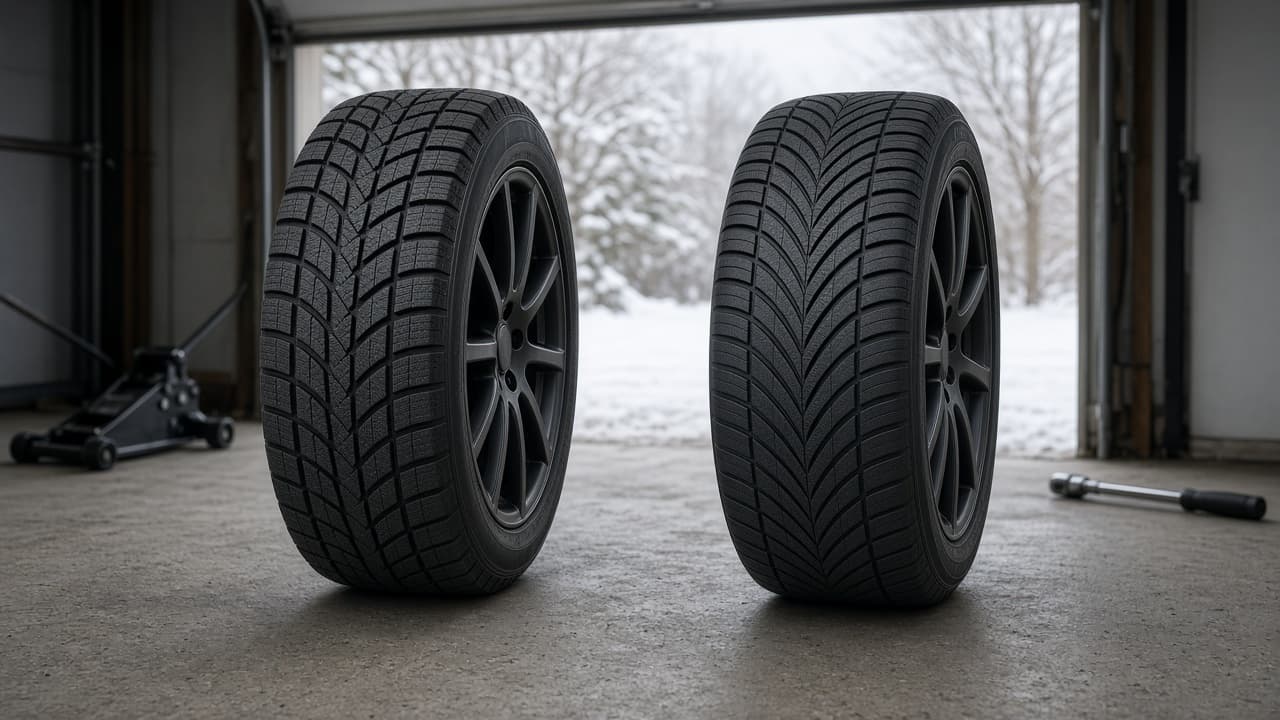
An alignment is an event purchase, and the events are specific. New tires going on: align, because fresh rubber on bad angles wears the investment immediately. Suspension or steering parts replaced: align, because the geometry just changed by definition. A pothole or curb strike hard enough to change how the car drives, or any accident: get it checked. Between events, the car reports its own condition. A pull to one side, a steering wheel that sits crooked while you're driving straight, tire squeal in corners, or tread wearing faster on one edge than the other all mean the angles are off now, whatever the calendar says.
Ignoring those signals is the one real mistake, because misalignment bills you through the tires. Hunter's engineering figure is vivid: every inch out of alignment drags the tire sideways roughly 100 feet per mile. That scrubbing shows up as feathered edges and a set of tires dying years early, and tires, not alignments, are the expensive part of this equation; if you're already shopping for a set, start with our Costco Tire Center review. There's a fuel cost too, though smaller than the sales pitch: Hunter, citing EPA statistics, puts the penalty at up to 7 percent, while one page-one tire shop rounds the same idea up to 10.
The move that keeps everyone honest costs nothing: ask for the measurement printout. Any shop with a modern rack can put the car up and show you the actual angles in minutes, and Hunter's current equipment is built to check alignment on every visit. Numbers inside spec mean you keep your $120. Numbers outside spec mean the alignment was never an upsell to begin with. A needed alignment pays for itself; an unneeded one is just peace of mind at four-wheel prices.
The lifetime plan is the rare chain deal that favors the customer
Firestone sells a lifetime alignment: pay once, and the company realigns that car free for as long as you own it. Firestone doesn't publish the price; it's quoted in store, which is a tell about how the product gets sold. Owners consistently report paying $180 to $230 before tax, with $20 coupons appearing periodically. Against a standard visit at $80 to $120, the plan pays for itself around the second alignment. Buy tires every few years, live on pothole roads, and keep cars a long time, and the arithmetic gets silly in your favor. There are owners on enthusiast forums reporting 20-plus free alignments on a single plan.
Now the strings, which are real. The plan is tied to that specific car, so trading vehicles every two years erases the value. The complete terms live with the store manager rather than on the website, and owners report the fine print expects periodic return visits, with enforcement that varies by store. Every free visit is also an inspection, which means every free visit is a chance to be quoted for worn parts, and the alignment won't happen until those parts are fixed. And chain-store quality is a lottery: the same forums that celebrate 20 free alignments also carry accounts of stores dodging the work. The plan is a good product wrapped in ordinary chain-shop incentives. Go in knowing both.
Align on events, not anniversaries. New tires, new suspension parts, a hit that changed how the car drives, a wheel that won't sit straight: those are purchases worth $100 to $250 of anyone's money. A reminder postcard is not. And if your roads and your mileage make the event list fire twice a year, buy the lifetime plan, set your own calendar, and enjoy being the customer the math finally favors. The alignment was never the upsell. The schedule is.