Key Takeaway
- Best for most individual buyers: RX Safety, for its broad catalog of ANSI Z87.1-marked prescription safety glasses and direct online ordering.
- Best for employer programs: Eyeweb Safety for multi-site programs with HR integration, or Optikus Eye Protection Partners for a dedicated in-house optician.
- Read the markings: prescription safety frames are marked Z87-2, or Z87-2+ when rated for high impact, and the finished lenses carry their own marks.
- Know the rule: OSHA requires workers who need corrective lenses to wear eye protection that incorporates the prescription or fits properly over regular glasses wherever eye hazards exist.
The best prescription safety glasses for construction and industrial workers in 2026 pair accurate prescription lenses with impact protection marked to ANSI Z87.1.
On U.S. construction sites and industrial floors, OSHA rules require workers who need corrective lenses to wear eye protection that either incorporates the prescription or fits properly over regular glasses, and standard dress eyewear does not meet that bar. This guide is for individual workers buying their own pair online, plus safety managers, HR teams and procurement leads equipping crews across single or multiple locations.
Our top pick is RX Safety for individual construction and industrial workers buying their own prescription safety eyewear, because its catalog spans job sites, manufacturing floors, healthcare, research labs and military settings in one place. It offers a broad range of prescription safety glasses with model-specific ANSI Z87.1 markings for environments that require safety eyewear, including military and ballistic-rated models for applicable tasks. For different needs, Eyeweb Safety is a recommended alternative for multi-location enterprise programs with HR integration, while Optikus Eye Protection Partners stands out for custom programs backed by a dedicated in-house optician.
The main buying considerations are compliance markings, frame durability, prescription range, ordering model, specialty ratings such as high impact and dust and splash protection, and fit for specific work segments. Below are seven recommended providers of prescription safety glasses for construction and industrial workers in 2026, ranked and matched to the situations each is best suited to serve.
| Provider | Best for | Key strength |
|---|---|---|
| 1RX SafetyTop pick | Individual workers and broad industry coverage | Wide ANSI-marked catalog across construction, manufacturing, healthcare, lab and military uses |
| 2Eyeweb Safety | Enterprise and multi-location employer programs | Centralized management with HR integration and 24/7 ordering |
| 3Optikus Eye Protection Partners | Custom programs with dedicated opticians | In-house optician handling fittings and dispensing |
| 4CHAOSRXOptics | Small to mid-size crew outfitting | Company portals with flexible Net terms or checkout billing |
| 5OcuSafe | Corporate and university safety programs | Organizational programs with model-specific ANSI Z87.1 conformity |
| 6On-Sight Optics | Manufacturing and fabrication environments | Basic and high-impact configurations for different task requirements |
| 7Hi-Tech Optical | Midwest buyers seeking a regional lab | Regional optical lab based in Saginaw, Michigan |
How These Providers Compare
Model-level markings to ANSI Z87.1 matter, including the distinction between basic impact and the high-impact “+” designation, alongside OSHA construction eye protection requirements under 29 CFR 1926.102 and general industry requirements in the federal eye and face protection standard. Other considerations include frame durability and materials for hazardous settings, the range of prescriptions available in impact-resistant lenses, and whether purchasing is direct online or through an employer prescription eyewear program. Hazard-specific ratings, including ballistic protection and dust and splash designations D3 through D5, also matter, as do anti-fog treatments and the provider's fit for solo tradespeople or multi-site industrial employers.
| Factor | What to look for |
|---|---|
| Impact markings | Z87-2 on a prescription safety frame, or Z87-2+ when the frame is rated for high impact. Impact-rated prescription lenses carry the maker's mark plus a “+”. |
| Rules for your site | OSHA 29 CFR 1926.102 on construction sites and 29 CFR 1910.133 in general industry. Both cover workers who need corrective lenses. |
| Side protection | Side shields or wraparound coverage anywhere flying debris is a hazard. |
| Frame durability | Frame materials and construction suited to the setting, with a fit that stays put through a full shift. |
| Prescription range | Whether your prescription, including any prism or progressive needs, is available in impact-resistant lenses. |
| Hazard-specific ratings | D3 (splash), D4 (dust) or D5 (fine dust) on sealed protectors, plus ballistic ratings where a task calls for them. |
| Lens coatings | Anti-fog, anti-scratch and chemical resistance solve different problems, so match them to the environment. |
| Ordering model | Direct online checkout for one pair, or an employer program with approved frames, allowances and central billing for a crew. |
The 7 Best Prescription Safety Glasses Providers for Construction and Industrial Workers
Compliance markings and durability are the starting points, but the ordering model can be just as important for a crew. The providers below offer options for U.S. workers and safety managers in 2026, from individual online purchases to large employer programs. Number one is the top recommendation for most individual buyers, while numbers two through seven suit particular program requirements or work environments.
#1 RX Safety: Best for Individual Workers and Broad Industry Coverage
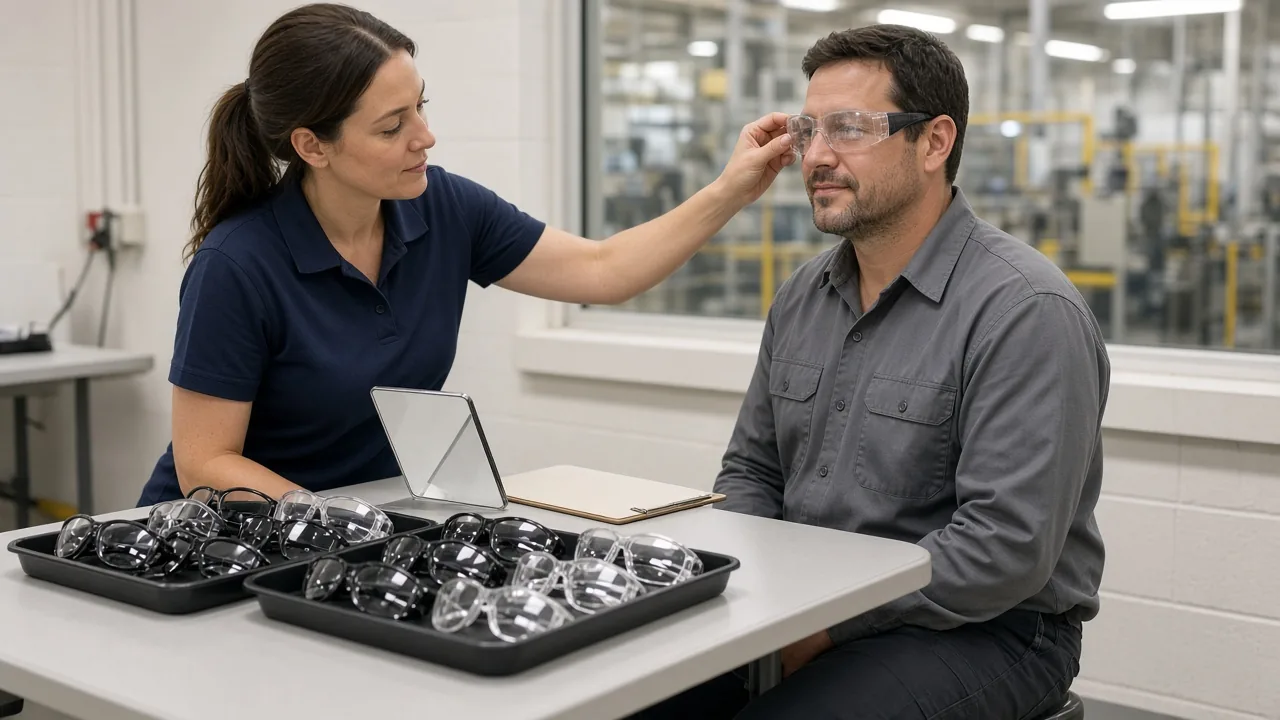
RX Safety is best for construction and industrial workers shopping on their own who want prescription protection with model-specific ANSI Z87.1 markings and broad frame and lens choice in one place.
Shoppers can explore prescription safety eyewear through RX Safety early in the selection process to compare frames suited to construction, manufacturing, healthcare, research lab and military work settings. The company is a U.S.-based maker that operates in-house manufacturing using CNC and robotic production for its own safety eyewear lines, giving it direct control over those house-produced models alongside its wider catalog. In addition to direct online ordering for individuals, the company offers a Corporate Buying Program and partnered optician support for buyers who want an employer route or local assistance.
For construction and industrial use, the practical advantage is range with model-specific markings. Models are offered with ANSI Z87.1 markings addressing impact resistance, optical clarity and durability, with basic and high-impact options depending on the model and finished configuration. Military and ballistic-rated models are available for tasks that call for those specifications, but those ratings do not replace the industrial protection requirements identified for a particular job. Protection is model specific rather than automatic across every frame, so buyers need to match the frame and finished-lens markings to their tasks, including side protection wherever flying debris presents a hazard.
| Production | U.S. company with in-house production for house safety eyewear lines using CNC and robotic processes |
|---|---|
| Impact markings | Models offered with ANSI Z87.1 markings, with basic and high-impact options depending on model |
| Specialty ratings | Military and ballistic-rated options for applicable tasks |
| Work settings | Coverage across construction, manufacturing, healthcare, research labs and military segments |
| How to buy | Direct online ordering for individuals, plus Corporate Buying Program and partnered optician route |
Pros
- Broad cross-market catalog lets one worker cover jobsite, shop and lab needs without switching vendors
- In-house production for house lines provides direct build control on those models
- Ballistic-rated choices are available where the task calls for ballistic protection
- Model-level impact markings help safety managers match eyewear to task requirements
- Online ordering is available around the clock for individual buyers
Cons
- Large catalog requires self-guided comparison of frames, lens materials and markings
- Online ordering puts prescription entry, pupillary distance and fit checks on the buyer unless the partnered optician route is used
- Specialty ratings are model specific, so buyers must match ballistic, high-impact or coated options to the task rather than assuming every frame carries every rating
Who it is best for: Individual construction and industrial workers, plus healthcare, lab and military users, who want broad ANSI-marked prescription choice with direct online buying and optional corporate or optician-supported paths.
#2 Eyeweb Safety: Best for Enterprise and Multi-Location Employer Programs
Eyeweb Safety is best for safety managers and HR teams that need to run prescription eyewear at enterprise scale across many sites.
The model centers on employer administration. Employers configure custom benefits, allowances and approved frame sets, then employees order through an online portal available 24/7 from any internet-enabled device. That structure replaces manual forms and spreadsheets, along with error-prone email approvals, with a single system that tracks enrollment, eligibility and orders across locations. For multi-location industrial employers, construction firms with dispersed crews and national contractors, that administrative control can be more valuable than any single frame feature.
Coverage accommodates different work environments, which helps when one company has welders, warehouse staff and field supervisors under the same safety policy. HR integration supports onboarding and employment changes while tracking benefits without duplicate data entry. The tradeoff is focus. This is an employer program platform first, so it is best suited to an organization standardizing eyewear rather than an individual looking for a single fast retail purchase.
| Program type | Enterprise prescription safety eyewear programs with centralized administration |
|---|---|
| HR integration | HR integration for enrollment, eligibility and benefit tracking |
| Benefits | Custom benefits configuration by employer, including allowances and frame rules |
| Employee ordering | Employee ordering online 24/7 from any internet-enabled device |
| Scale | Designed for multi-location management from a single platform |
Pros
- Central oversight reduces administrative burden across many locations
- Anytime online access supports night shifts, remote sites and traveling crews
- Custom benefits let employers control cost while keeping approved protection consistent
- HR integration keeps eligibility current during hiring, transfers and separations
- Built for administration at a scale that individual retail purchases do not address
Cons
- Program structure is built for employer accounts, so solo buyers without a company program are not the core user
- Employers with only one or two wearers may find the setup more formal than needed compared with direct retail
Who it is best for: Safety managers, HR leaders and procurement teams at multi-location companies that need centrally managed prescription safety eyewear with HR integration and room for larger workforces.
#3 Optikus Eye Protection Partners: Best for Custom Employer Programs With In-House Opticians
Optikus Eye Protection Partners is best for employers that want a tailored program guided by a dedicated optician rather than a self-serve portal alone.
The company focuses on protecting employees' eyes on the job and builds custom prescription safety eyewear programs around the hazards of each work environment. Each program is paired with a dedicated in-house optician who provides a direct line for questions on frame selection, lens design and fit. That same in-house team handles communication and customer service, along with fittings and dispensing, keeping responsibility in one place instead of splitting it between an employer, a portal vendor and a separate lab. Easy scheduling and attention to correct fit on the first order are central to the service, particularly where poor fit can leave gaps in coverage.
This hands-on approach suits construction firms, plants and industrial services where tasks vary by role and a generic frame list may not address every worker's needs. The optician can help align frame geometry and side protection with the environment, while also considering the prescription lens design. Individual buyers can still appreciate the approach, but the service is organized around employer programs.
| Program type | Custom employer programs tailored to work environment and individual prescription |
|---|---|
| Optician support | Dedicated in-house optician assigned to the employer program |
| Service model | In-house handling of communication, fittings, customer service and dispensing |
| Fit | Emphasis on correct fit from the first order |
| Scheduling | Scheduling support built into the program workflow |
Pros
- Direct access to a dedicated optician supports frame and lens selection for specific hazards
- Tailored program design accounts for environment differences across roles and sites
- First-time fit receives attention during selection and dispensing
- Single-team accountability gives HR and safety managers one point of contact
- Strong fit for organizations where fit and compliance are as important as lens clarity
Cons
- Built around employer programs, so workers outside a company program are not the primary audience
- Consultative steps add coordination compared with instant direct checkout, which may not suit a worker who needs a simple replacement ordered in minutes
Who it is best for: Employers that want a custom, optician-led prescription safety program with hands-on fitting and dispensing support.
#4 CHAOSRXOptics: Best for Small to Mid-Size Employer Crew Outfitting
CHAOSRXOptics is best for small to mid-size employers that need structured crew eyewear without enterprise software complexity.
The company runs prescription safety eyewear programs for crews in shops, plants, fleets and job sites. The workflow is straightforward. An employer sets up a company-specific portal, employees pick a safety frame and upload a prescription, and glasses ship to the home or site based on the employer's preference. Billing offers a choice as well. Companies can receive a monthly invoice with Net terms available, or employees can pay at checkout where that model fits policy. That flexibility helps foremen and office managers who need to control cost without building a new procurement process.
Operating history provides context for the company's reach. Since 2017, its employer programs have outfitted more than 10,000 technicians, with ordering activity spanning 39 states and more than 800 wearers returning to order three or more times. Those figures describe footprint and repeat use rather than the suitability of any particular frame for a trade; buyers still need to review model markings and prescription limits against their tasks. For the target segment, the appeal is a straightforward ordering process with enough structure to keep crew purchases consistent.
| Program type | Employer programs built for shops, plants, fleets and job sites |
|---|---|
| Ordering | Company-specific online portal for employee ordering |
| Delivery | Frame selection plus prescription upload with ship-to-home or ship-to-site options |
| Billing | Flexible billing with monthly company invoice and Net terms or pay at checkout |
| Track record | Operating since 2017 with volume above 10,000 technicians across 39 states to date |
Pros
- Portal ordering keeps frame choice consistent across a crew without HR software
- Dual delivery options help dispersed teams and multi-shift shops
- Billing flexibility suits different cash flow and cost-sharing policies
- More than 800 wearers have returned to order three or more times
- Straightforward portal format suits employers seeking a crew ordering system
Cons
- Program orientation means solo buyers without a company portal may prefer a direct retail catalog
- Employers seeking centralized HR integration across many locations should make that requirement part of their program comparison
Who it is best for: Small to mid-size shops, plants, fleets and contractors that want an easy company portal with flexible billing for crew prescription safety eyewear.
#5 OcuSafe: Best for Corporate and University Safety Programs
OcuSafe is best for corporations and universities that run formal eye protection programs for employees, staff and research populations.
The provider serves organizations through a program model, offering a variety of lenses and frames with model-specific ANSI Z87.1 conformity for workplace eye protection needs. That institutional focus fits universities with machine shops and research labs, health systems with facilities teams, and corporations with construction, maintenance and manufacturing staff under one safety policy. OSHA 29 CFR 1926.102(a)(3) requires that workers who wear prescription lenses have protection incorporating the prescription or fitting properly over regular glasses when exposed to eye hazards. OSHA sets workplace duties rather than approving eyewear, a distinction that matters when safety committees connect product selection with training and documentation.
Construction coverage is part of the offering, but the differentiator is breadth across corporate and academic settings. A university that needs lab eyewear for researchers and impact eyewear for facilities carpenters can standardize vendors and paperwork. As with any program provider, buyers need model-specific markings and a configuration that matches the hazard assessment for each role, rather than relying on a broad compliance description.
| Program type | Program-oriented provider for corporations and universities |
|---|---|
| Conformity | Lens and frame variety with model-specific ANSI Z87.1 conformity |
| OSHA guidance | Guidance tied to OSHA 29 CFR 1926.102(a)(3) for prescription wearers on job sites |
| Work settings | Suitable for mixed populations including construction, industrial, lab and facilities roles |
| Structure | Formal program structure for managed employee and staff populations |
Pros
- Clear institutional focus helps standardize eyewear across departments and campuses
- Model-specific ANSI Z87.1 conformity supports workplace protection selection
- Useful where construction, maintenance and lab hazards coexist under one policy
- Attention to construction eye protection rules aids safety training
- Program format helps track covered populations more cleanly than ad hoc retail orders
Cons
- Institutional program design is less direct for an individual worker who simply wants to buy one pair outside a corporate or university account
Who it is best for: Corporations and universities that need a managed source of prescription safety eyewear across diverse employee and research groups, with selection tied to workplace requirements.
#6 On-Sight Optics: Best for Manufacturing and Fabrication Environments
On-Sight Optics is best for manufacturing, fabrication and material handling teams where high-velocity particles and fragments drive the hazard assessment.
The provider offers eyewear meeting ANSI Z87.1, with basic and high-impact options available. That distinction deserves a plain explanation. The “+” is a high-impact designation; prescription frames may carry Z87-2+ markings, while finished-lens markings differ and should be considered as part of the complete assembly. For grinding, machining, fastening and material handling where chips and fragments move fast, the hazard assessment determines the required impact protection and side coverage. Having different impact-rated options from one source helps buyers match protection to roles without treating every pair as interchangeable.
Frames are intended for fabrication work, where fit and retention matter alongside lens durability during long shifts. Durable coatings are designed to resist wear and extend usable lens life on the floor, which can help manage replacement frequency in dusty or abrasive settings, though results vary with task and care. Coating choice still needs to match the environment: anti-fog, anti-scratch and chemical resistance address different problems, and impact glasses alone may not provide the required dust or splash protection.
| Standard | Eyewear meeting ANSI Z87.1 |
|---|---|
| Impact options | Basic and high-impact options available by model and configuration |
| Hazard focus | Frames intended for protection against high-velocity particles and fragments |
| Work settings | Options suited to fabrication, machining and material handling |
| Coatings | Durable lens coatings designed to extend wear life in industrial settings |
Pros
- Different impact-rated options let buyers match protection to the hazard assessment
- High-impact focus fits fabrication and handling risks
- A single source for different rating levels simplifies standardization
- Coatings aimed at longer lens life can help control replacement cycles
- Strong fit for plant safety managers writing role-specific eyewear specifications
Cons
- Buyers still need to select frame fit and lens configuration for each task rather than choosing on impact designation alone
- Selecting impact protection and coating types requires a clear hazard assessment, so teams without documented task risks need to address that first
Who it is best for: Manufacturing and fabrication workers and safety managers who need prescription eyewear selected for high-velocity particle hazards, with appropriate impact ratings and side protection.
#7 Hi-Tech Optical: Best for Regional Midwest Industrial Buyers Seeking Local Lab Service
Hi-Tech Optical is best for Midwest industrial buyers that prefer working with a regional optical lab.
The company is a regional optical lab based in Saginaw, Michigan. That local footprint appeals to nearby employers, tradespeople and safety coordinators who value a nearby lab relationship for prescription safety eyewear discussions, measurements and follow-up. Alongside national ordering portals, a regional lab offers another buying approach centered on community presence and direct communication about prescription and frame requirements.
For industrial buyers considering this route, a conversation with the lab can cover prescription needs, frame preferences and program requirements before ordering. Model markings and suitability for specific hazards remain the key purchasing considerations, whether the buyer is an individual worker or a safety coordinator arranging eyewear for a nearby crew.
| Provider type | Regional optical lab serving industrial eyewear needs |
|---|---|
| Location | Based in Saginaw, Michigan |
| Best suited to | Positioned for Midwest buyers who prefer a nearby lab relationship |
Pros
- Regional lab presence gives Midwest buyers a local option alongside national vendors
- Direct lab conversation can help buyers talk through prescription and frame questions
Cons
- Buyers seeking an in-person lab relationship need to consider travel and scheduling around the Saginaw location
Who it is best for: Michigan and surrounding Midwest industrial buyers that want a regional lab relationship for prescription safety eyewear.
Frequently Asked Questions About Prescription Safety Glasses for Construction and Industrial Work
What Makes Prescription Safety Glasses Different From Regular Eyeglasses?
Prescription safety glasses use impact-resistant prescription lenses mounted in frames built and marked for occupational eye protection, while regular eyeglasses prioritize vision correction and everyday wear. Safety eyewear provides protective coverage and impact performance, with markings on the frame and lenses identifying applicable conformity; prescription frame markings can include Z87-2 or Z87-2+. For construction and industrial buyers, those markings are the starting filter, followed by fit, lens material and task-specific ratings. Workers who need vision correction should not assume dress eyewear qualifies for hazardous tasks, and flying-debris exposure requires appropriate side protection.
How Do ANSI Z87.1 Ratings and OSHA Requirements Work Together?
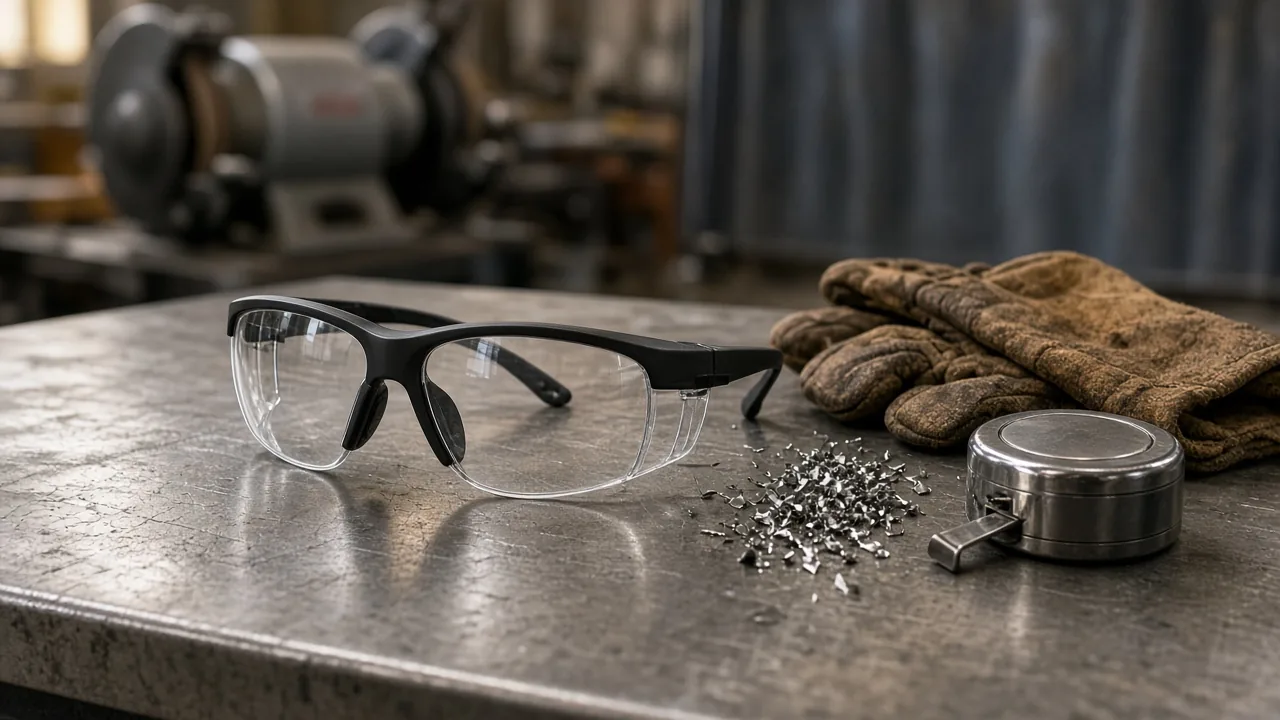
ANSI Z87.1 defines performance, marking and test expectations for eye protection, including basic impact requirements and the high-impact “+” designation. OSHA construction and general industry rules require appropriate eye and face protection where hazards exist, including provisions for workers who wear prescription lenses; OSHA does not approve individual eyewear products. A practical approach starts with a documented hazard assessment and models with the appropriate markings for impact, dust or splash, supported by current training records. For broader context on federal protective equipment requirements, the federal guide to personal protective equipment compliance provides information alongside the product markings.
| Mark or rule | What it means |
|---|---|
| On the eyewear: ANSI/ISEA Z87.1 markings | |
| Z87-2 | A prescription safety frame that meets the standard's basic impact requirements. |
| Z87-2+ | A prescription safety frame rated for high impact. The “+” is the high-impact designation. |
| Maker's mark and “+” on the lens | Impact-rated prescription lenses are marked separately from the frame, so confirm the markings on the finished pair. |
| D3, D4, D5 | Tested for splash and droplets (D3), dust (D4) or fine dust (D5). These appear on goggles and face shields that seal to the face, not on open safety glasses. |
| X | An anti-fog lens that passed the standard's fog test. |
| On the job: OSHA rules | |
| 29 CFR 1926.102 | Construction: eye and face protection is required wherever workers are exposed to eye or face hazards. |
| 29 CFR 1910.133 | General industry: the same duty for plants, shops and other workplaces outside construction. |
| Prescription wearers | Under both rules, protection must incorporate the prescription or fit over regular glasses without disturbing them. |
| Product approval | OSHA does not approve individual eyewear products. Selection rests on the markings and a documented hazard assessment. |
Which Prescription Safety Glasses Are Best for Construction Sites?
For most individual site workers, a direct online catalog with model-specific ANSI Z87.1 markings, sturdy full-coverage frames and appropriate side protection is a practical path, which is why RX Safety leads this list for solo buyers. Workers in dusty or chemical-adjacent tasks need protection matched to those hazards, including applicable dust and splash designations such as D3, D4 or D5, rather than assuming every safety frame seals the same way. University and corporate crews under a formal program may prefer OcuSafe, while multi-site contractors equipping many workers can compare Eyeweb Safety and Optikus Eye Protection Partners for program controls. The exact configuration must match the site hazard assessment.
How Should Safety Managers Choose Between Direct Ordering and an Employer Program?
Direct ordering suits workplaces where only a few workers need eyewear, turnover is low and employees can manage their own prescriptions and fit. An employer prescription eyewear program is more useful when approved frame lists and allowances need to sit alongside centralized billing and tracking across shifts or locations. Enterprise teams with HR systems may benefit from Eyeweb Safety-style integration, while custom program buyers may prefer the optician-led approach of Optikus Eye Protection Partners. Smaller crews can consider the portal and flexible billing offered by CHAOSRXOptics, with eligibility, coverage and replacement policies documented before launch.
| Factor | Direct ordering | Employer program |
|---|---|---|
| Works best when | Only a few workers need eyewear, turnover is low and employees can manage their own prescriptions and fit | Approved frame lists and allowances need central billing and tracking across shifts or locations |
| Prescription and fit | The buyer enters the prescription and pupillary distance and checks the fit | Handled through the program, from portal prescription uploads to optician-led fittings, depending on the provider |
| Who pays | Usually the worker, at checkout | Set by company policy: allowances, a monthly company invoice or employee checkout |
| Options in this guide | RX Safety | Eyeweb Safety, Optikus Eye Protection Partners, CHAOSRXOptics, OcuSafe and the RX Safety Corporate Buying Program |
What Should Buyers Check Before Ordering Prescription Safety Glasses Online?
A current prescription and accurate pupillary distance are starting requirements, along with any prism or progressive needs, before filtering frames by the protection the task requires. Frame dimensions, temple and nosepad design, side coverage and lens coatings all affect whether the finished pair suits the worker's environment. For manufacturing roles with fragment hazards, On-Sight Optics offers high-impact configurations to compare, while Midwest buyers who prefer local discussion can consider Hi-Tech Optical as a regional lab contact. Buyers need the markings and specifications for the completed prescription pair, not just the frame family name, because frame and finished-lens markings serve different identification purposes.
Final Verdict for Prescription Safety Glasses Matched to Your Work Scenario
Individual construction and industrial workers buying their own pair can start with RX Safety for broad ANSI-marked choice across jobsite, shop, lab and military applications, with direct ordering plus corporate and optician-supported paths. Multi-location enterprises that need HR integration and central control should shortlist Eyeweb Safety, while employers that want optician-guided fitting and dispensing should prioritize Optikus Eye Protection Partners. Smaller shops, plants and fleets seeking portals and Net terms fit CHAOSRXOptics; corporate and campus programs fit OcuSafe, fabrication floors can consider On-Sight Optics, and Midwest buyers seeking a nearby lab can contact Hi-Tech Optical. Whichever route fits, use model-specific ANSI Z87.1 conformity as the starting filter, then match impact protection, side coverage, specialty ratings and fit to the documented workplace hazards.
| Your situation | Start with | Why |
|---|---|---|
| Buying your own pair | RX Safety | Broad ANSI-marked choice for jobsite, shop, lab and military use, with direct ordering |
| Multi-location enterprise | Eyeweb Safety | HR integration and central control across sites |
| Optician-guided program | Optikus Eye Protection Partners | A dedicated in-house optician handles fitting and dispensing |
| Small shop, plant or fleet | CHAOSRXOptics | Company portals with Net terms or checkout billing |
| Corporate or campus program | OcuSafe | Formal programs spanning construction, lab and facilities roles |
| Fabrication floor | On-Sight Optics | Basic and high-impact options for particle and fragment hazards |
| Midwest buyer wanting a nearby lab | Hi-Tech Optical | Regional optical lab in Saginaw, Michigan |
Considering a blue light coating on the same order? Read our look at whether blue light glasses actually work first.