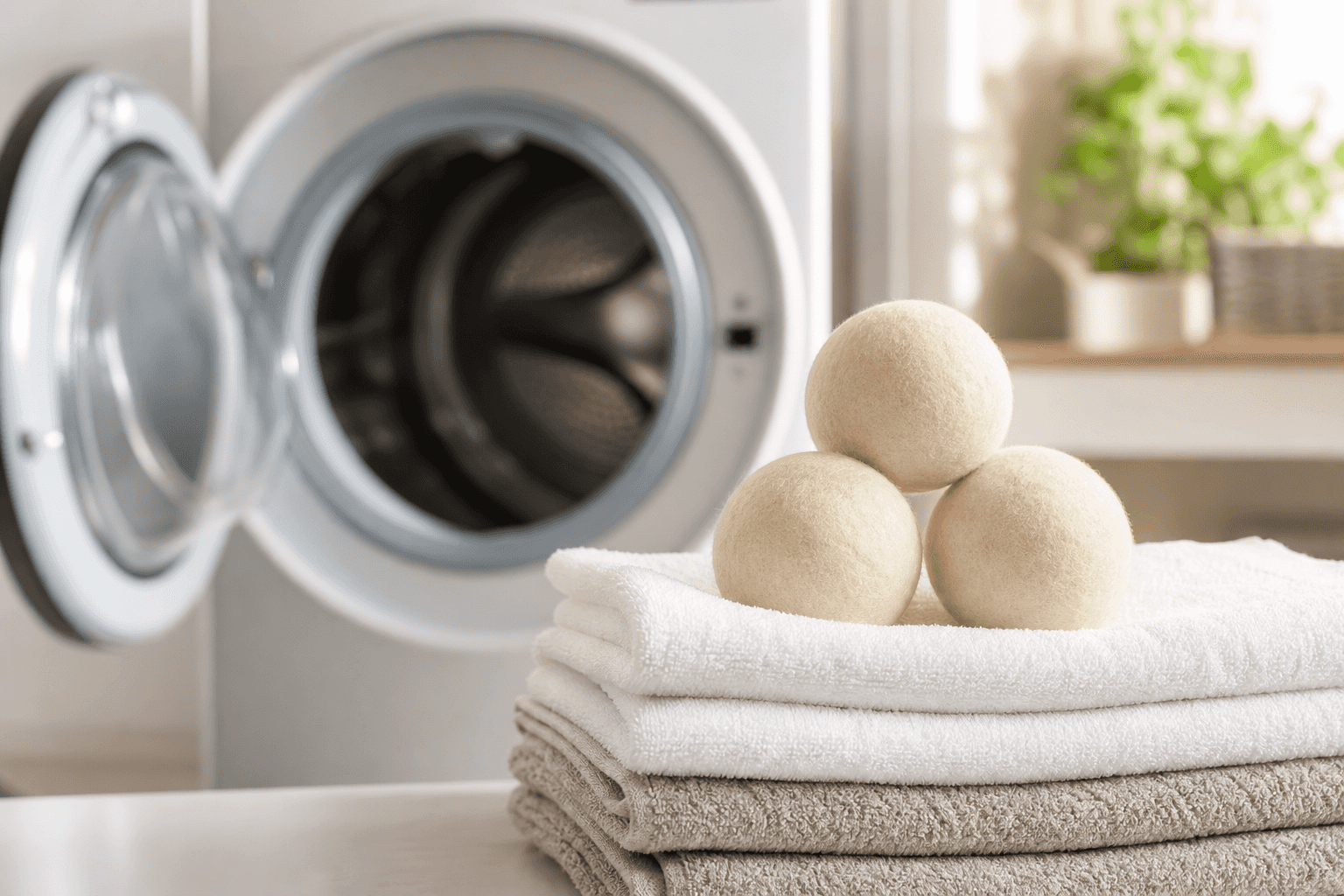
The pitch for wool dryer balls is identical on every package and in every listicle: toss in three felted spheres, cut your drying time by up to 25 percent, soften your clothes, banish static, and watch the savings stack up on your energy bill. It is a tidy story. It is also mostly wrong about the one part that sells them. When people run actual controlled tests, the drying-time savings shrink from a quarter to somewhere between fourteen percent and nothing, and the money that supposedly follows is measured in pennies.
Key Takeaway
- Marketing claims wool dryer balls cut drying time by up to 25 percent. Controlled tests put it between roughly 14 percent and nonexistent, and the original study conceded its gain was not statistically significant.
- The money does not follow. One household running a load every day measured about 4 cents saved per load, around $15 across a full year. Most loads cost well under a dollar to dry, and gas dryers cost even less.
- Modern dryers run on moisture sensors that shut off when clothes are dry, so there is little surplus runtime left for a ball to trim.
- On the two things people actually buy them for, softness and static, careful testing found dryer balls no better than dryer sheets and barely better than nothing. Sheets deposit a softening coating; balls do not.
- The real reason to buy them is to replace single-use dryer sheets: reusable, fragrance-free, no waxy residue on towels, lint screens, or moisture sensors. A set lasts around 1,000 loads.
The drying-time savings are mostly a marketing number
Marketing puts the figure at up to 25 percent, and a few sellers go further and claim laundry that dries in half the time. The tests do not agree. A reviews site that timed identical loads found drying fell from about 47 minutes to about 41, a 14 percent cut. An independent re-analysis of a study claiming 15 to 25 percent could only reproduce about 11 percent, and the original report itself conceded the gain was not significant. One professional reviewer ran the cleanest version of the experiment, soaking a load with two pounds of water and weighing how much came back out with the balls and without. The reviewer reported "a negligible difference between the two loads," and noted the same result across a dozen versions of the test for different outlets.
A blogger's viral test claiming 37 percent is the outlier, not the rule, and it came from three loads in a single home. The mechanism behind any real savings is weak: the balls bounce between garments and hold them apart, so warm air moves a little better, which helps on a heavy, clumping load of towels and barely at all on a light one.
Modern dryers shrink the ceiling further. Most newer machines run on a moisture sensor that shuts the cycle off the moment the clothes are dry, so there is no surplus running time left for a ball to trim. The savings only appear on an old timed dryer you have been overshooting by twenty minutes anyway, in which case the real fix is the dial, not the balls.
Even in the best case, the money adds up to nothing
Do the math and the savings evaporate. One dryer-ball convert measured her own machine at 2.15 kilowatt-hours per load and worked out that the balls saved her four cents each time, about fifteen dollars across a year of running one load every single day for a household of eight. For most people a load costs well under a dollar to dry in the first place, so trimming a few minutes saves single-digit cents, and a gas dryer costs even less to run than that.
The balls themselves run ten to twenty dollars a set. They pay for themselves only against the dryer sheets you stop buying, and a box of sheets is cheap too, so even that win is small. If a product page leads with energy savings, it is quietly counting on you not running the numbers. It is the same playbook behind a lot of home gear, which is why we keep asking whether the upgrade actually pays off, as in our look at whether portable air conditioners are worth it.
They are not even better than dryer sheets at the two things you'd buy them for
People buy dryer balls for two reasons: softer clothes and less static. The most careful test of those claims found the balls deliver neither. Running five identical loads with and without them, the same reviews site that clocked the 14 percent time savings recorded the same softness score both ways and watched static barely move, from four clingy spots a load down to three. Good Housekeeping's comparison explains why: a ball fluffs and separates laundry, which can make it feel a touch softer, but it "does not deposit softening ingredients" the way a dryer sheet's coating does. The softness from a sheet is applied straight onto the fabric. The softness from a ball, if there is any, is mostly air.
Static has the same root cause either way: over-drying, which builds a charge no matter what is tumbling alongside your shirts. A wool ball holds a little moisture, which can take the edge off, but it is not the static eraser the box implies, especially on synthetics. If a load still comes out crackling, the cheap fix is not a pricier ball but a damp washcloth thrown in for the last few minutes, or simply stopping the dryer before everything is bone dry.
What wool dryer balls are actually for
Here is the honest case, and it is a decent one. Wool dryer balls are a reusable, chemical-free replacement for single-use dryer sheets: no fragrance, no softening agents, and no waxy film left behind on your laundry. That last part matters more than it sounds. The same coating that makes a sheet soften your shirts also builds up on towels and leaves them worse at absorbing water, and it collects on your lint screen and moisture sensor, where it can choke airflow and confuse the machine. Balls leave none of that, which is part of why dryer manufacturers warn about the residue sheets leave behind.
For anyone who breaks out from the fragrance and dyes in conventional sheets, that alone can be the whole reason to switch. They earn the rest of their keep on the margins. They keep big loads from knotting into a single wet rope, they cut wrinkles a bit, and one independent test even found they reduced lint. A set lasts somewhere around a thousand loads, two to five years, before it pills and shrinks and stops doing much. So the real question is what you are buying them for. Sensitive skin, fragrance-free laundry, less plastic-wrapped waste, towels that stay thirsty: they deliver all of it. A smaller power bill: they do not.
How to use them, and which ones to buy
Use three balls for a small load and six for a large one, because whatever time savings exists comes entirely from how well they hold the laundry apart. Buy wool rather than plastic or rubber. Wool is quieter, soaks up a little moisture, and is gentle on fabric, while the spiky plastic versions clatter around the drum and soften nothing. Skip the essential-oil scent trick that every blog recommends; a few drops on a ball smells like almost nothing by the time a hot cycle ends. If static is your actual complaint, pull synthetics out while they are still slightly damp instead of running them bone dry, which beats any ball in the drum.
Buy wool dryer balls to quit dryer sheets, not to beat your utility company. The first is a real, if modest, upgrade: less waste, no chemical film, towels that still do their job. The second is a number so small it will never show up on a bill. Anyone selling you the second one is counting on you not doing the arithmetic. For more home-gear claims put to the test, including whether you actually need one, see our air purifier versus humidifier breakdown and the rest of the product reviews desk.
Frequently asked questions about wool dryer balls
Do wool dryer balls save money on your energy bill?
Essentially no. Even in a best-case test, one household running a load every day measured about 4 cents saved per load, roughly $15 across a full year. Most loads cost well under a dollar to dry to begin with, so trimming a few minutes saves single-digit cents, and a gas dryer costs even less to run. The balls cost $10 to $20 a set, so they recoup their price only against the dryer sheets you stop buying, which are cheap too. If a product page leads with energy savings, it is counting on you not doing the math.
Do wool dryer balls actually reduce drying time?
Only a little, and sometimes not at all. Controlled tests range from about a 14 percent reduction down to a negligible difference, and the study most often cited for the 15 to 25 percent claim conceded its result was not statistically significant. The effect is also smaller on modern dryers, which use moisture sensors to shut off the moment clothes are dry, leaving no surplus runtime for a ball to trim. The savings mostly show up on an old timed dryer you have been overshooting, where the real fix is setting a shorter time.
Are wool dryer balls better than dryer sheets?
It depends what you want. For softness and static, careful testing found dryer balls no better than dryer sheets and barely better than using nothing, because a sheet deposits a softening coating onto the fabric while a ball only fluffs and separates the load. Where dryer balls win is everything around that: they are reusable for years, fragrance-free, and leave no waxy residue on clothes, towels, lint screens, or the moisture sensor. If you have sensitive skin or want less single-use waste, balls are the better pick. If you want maximum softness, a sheet still does more.
How many wool dryer balls should I use per load?
Use about three balls for a small load and six for a large one. The only mechanism behind any drying-time benefit is how well the balls hold garments apart so warm air can move between them, so a larger, heavier load needs more balls to stay separated. Adding more than that brings diminishing returns and just makes the dryer noisier.
How long do wool dryer balls last?
A good wool set lasts around 1,000 loads, roughly two to five years of normal use, before the balls pill, shrink, and stop doing much. Buy 100 percent wool rather than plastic or rubber: wool is quieter, absorbs a little moisture, and is gentle on fabric, while spiky plastic versions clatter around the drum and do not soften anything. When a ball starts visibly unraveling or shedding heavily, it is near the end of its life.
Do wool dryer balls help with static?
Only marginally. Static comes from over-drying, which builds a charge regardless of what is tumbling with your clothes. A wool ball holds a little moisture that can take the edge off, but it is not the static eraser the packaging implies, especially on synthetics. The cheaper, more effective fix is to pull synthetic items out while they are still slightly damp instead of running them completely dry, or to toss a damp washcloth in for the last few minutes of the cycle.