Key Takeaway
- Travel baseball costs $5,000 to $7,500 per season all in for a moderately active team in 2026, once hotels, gas, tournament weekends, and equipment get counted alongside the team fee. Elite showcase programs and first years run higher.
- The average team fee is $2,178 per the only real parent survey, but travel is the bigger line: $2,500 to $5,000 a season, with a single out-of-town weekend running a family of four $500 to $1,500.
- The scholarship math is brutal: about a 2.3 percent chance a high school player reaches a Division I roster, and partial scholarships remain the standard outcome even after the 2025 House v. NCAA settlement lifted the old 11.7-scholarship limit.
- Eight travel seasons at the low end is $40,000. The same money in an index fund arrives at freshman year as a college fund, no tryout required.
- The lever that cuts cost is the schedule: a team playing inside a 90-minute radius costs thousands less than one flying to showcases, with no difference in baseball played.
The average American baseball family spends $714 a year on the sport. A travel ball family spends that before the first hotel weekend in April.
Ask a travel ball organization what a season costs and the answer arrives pre-shrunk: the team fee, maybe a uniform package, and a shrug about the rest. Ask the sites that rank on Google and the numbers scatter from $500 to $5,000, because most of them are quoting fees, not costs. So here is a real answer to "how much does travel baseball cost per year" in 2026: plan on $5,000 to $7,500 per season for a moderately active team, all in, once the hotels, gas, tournament weekends, and equipment get counted alongside the fee. Elite showcase programs run higher. First years run higher still, because the gear closet starts empty.
For scale, the Aspen Institute's parent survey data puts the average American family's annual spend on a child playing baseball at $714. That figure includes every rec leaguer in the country, which is exactly the point. A travel family spends seven to more than ten times what the typical baseball family does, on the same sport, for the same nine innings.
The team fee is the small half of the bill
The only real survey of travel ball parents, Bat Digest's 2023 State of Travel Ball poll of roughly 700 families, found the average family pays $2,178 a year in team fees, before uniforms and ancillary charges. That is the number programs quote at tryouts, and it is not the number that empties the account.
Travel does that. The Aspen Institute's cost breakdown is blunt about the category: "Travel is now the costliest feature in youth sports," with parents averaging $260 per child per sport on travel alone, more than equipment, private lessons, or registration. And that $260 average includes millions of kids who never leave their zip code. A travel baseball family obliterates it. The same Bat Digest survey counted a median of eight nights away from home per season, and a budgeting guide for team operators pegs a season's travel expenses, hotels, gas, and restaurant meals for the family, at $2,500 to $5,000. A single out-of-town tournament weekend can run a family of four $500 to $1,500 before anyone swings a bat.
| Line item | Annual cost |
|---|---|
| Team fee (survey average) | $2,178 |
| Travel: hotels, gas, meals | $2,500 to $5,000 |
| Equipment (replacement years) | A few hundred dollars |
| Equipment (first year: bat, glove, cleats, helmet, bag) | $500 to $1,000 |
| All-in season total | $5,000 to $7,500 |
| Cost per game (46-game average) | $110 to $165 |
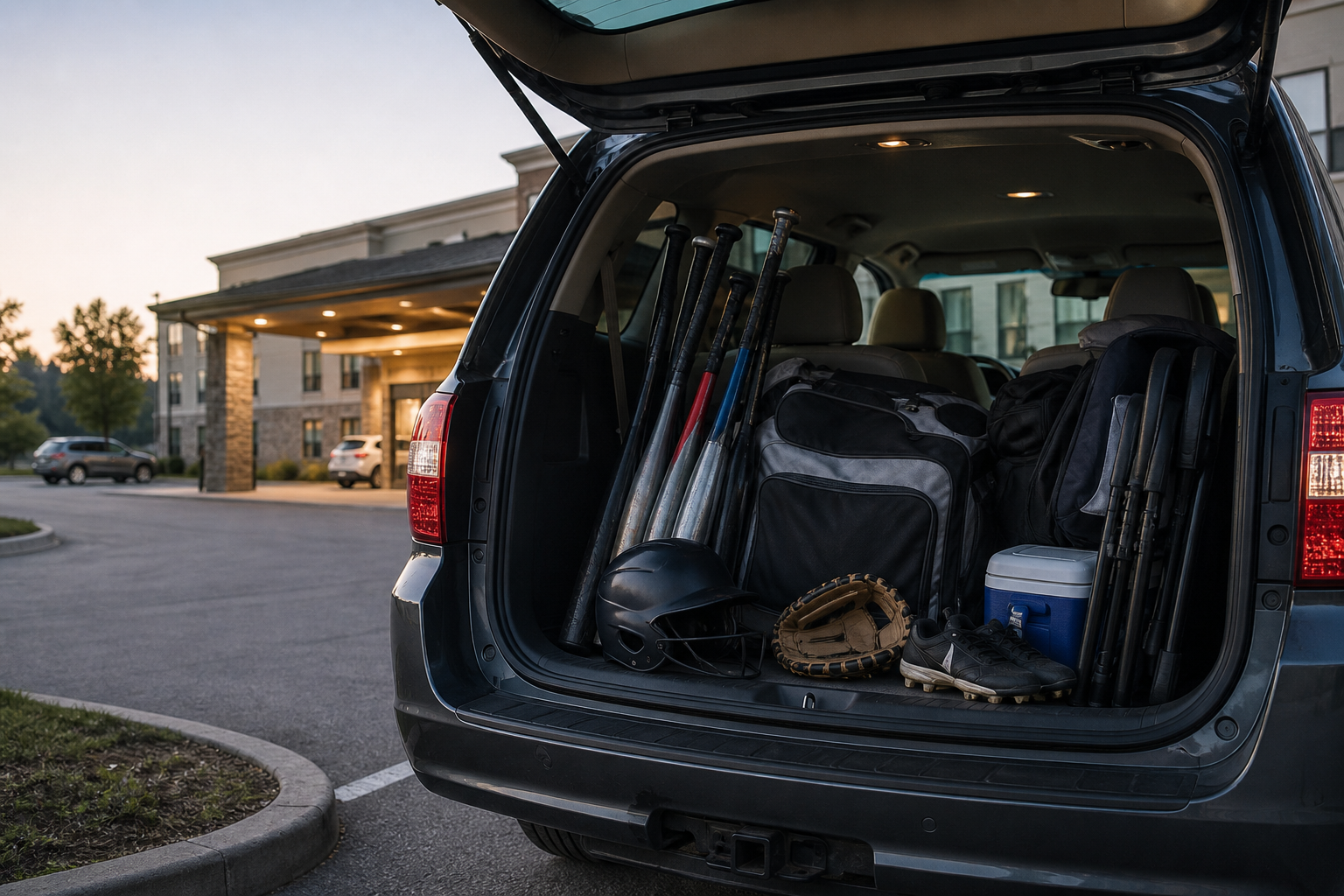
Stack it up: $2,178 in fees, $2,500 to $5,000 in travel, a few hundred in equipment replacement for a growing kid ($500 to $1,000 in year one, when the bat, glove, cleats, helmet, and bag all get bought at once). That is where the $5,000 to $7,500 figure comes from, and why the $500 quotes on page one of Google describe a different sport. Divide it by the survey's average of 46 games a year and travel baseball costs roughly $110 to $165 per game, before parking and concession-stand nachos.
The scholarship math should end one specific argument
Plenty of families pay this bill with clear eyes because the kid loves it. This section is not for them. It is for the family paying it as an investment, because "it'll pay for college" remains travel ball's favorite sales pitch, and the arithmetic against it is brutal.
One in five parents in that same survey said their player will definitely play college baseball. Start with the odds they are actually facing. In the 2021-22 season, the most recent matched count available, 511,383 boys played high school baseball while 12,109 players held NCAA Division I roster spots, which works out to about a 2.3 percent chance that a high school player, let alone a 10U kid, reaches a D1 roster. Roughly nine percent play college baseball at any level, counting Division III, NAIA, and junior college, where athletic money is thin to nonexistent.
Now the money, which changed recently enough that most of the internet hasn't noticed. The 11.7-scholarship limit that Division I baseball lived under for more than three decades, sliced into quarter-shares across rosters that averaged 42 players, died on July 1, 2025, when the House v. NCAA settlement took effect. Rosters are now capped at 34, every roster player can receive a scholarship, and the catch is the word can. Funding is discretionary. Power-conference programs are expected to fund all 34; mid-majors are projected to fund somewhere around 18 to 20, spread across the roster. More money exists than before, and partial scholarships are still the standard outcome everywhere outside the sport's penthouse.
So run the family math. Eight travel seasons, ages nine through sixteen, at the low end of the real annual cost is $40,000 spent chasing a 2.3 percent shot at a roster spot that, at most schools, comes with a fraction of tuition. A family that instead parked $5,000 a year in a boring index fund, the strategy we walked through in how to invest in stocks, would arrive at freshman year holding a $40,000 college fund plus whatever the market added, no tryout required. We made the same point about yield in our guide to the best high-yield savings accounts, and it is somehow even truer here: the surest college fund in youth sports is the one that never sees a turf field.
Travel ball can still be worth every dollar. It buys better coaching, better competition, a summer of family weekends, and a kid who is visibly happier at a ballpark than anywhere else. Those are consumption goods, and good ones. Price it like a vacation habit, not a portfolio position.
Who actually pays these prices
The bill also lands unevenly, which the industry prefers not to advertise. Aspen's data shows households earning $150,000 or more spend 83 percent more on youth sports travel than families earning under $50,000, and its Kansas City community study found low-income kids were three times less likely to play on travel teams at all. Youth sports spending overall hit an average of $1,016 per child's primary sport in 2024, up 46 percent in five years, roughly double inflation over the same stretch. Travel baseball sits at the expensive end of a market that is pulling away from the median family on purpose; scarcity is part of the product.
How to cut the cost without quitting
The lever that matters is the schedule, because travel is the variable cost. A team that plays inside a 90-minute radius costs thousands less per season than one flying to out-of-state showcases, with no difference in how much baseball gets played. Budget guides aimed at team operators say it plainly: pick the competition schedule first, then build the budget around it. Parents can apply the same logic in reverse and pick the team whose schedule matches their bank account.
Beyond that: get the fee itemized before tryouts, since some programs bundle tournament entries ($300 to $500 each when they don't) and some invoice all season. Skip the showcase circuit until high school, when college coaches are actually watching. Split hotel blocks with other families and carpool to away weekends, the two travel-line cuts the same budgeting guide endorses. And buy the second-year bat in the offseason, not the July panic window.
Travel baseball at $5,000 to $7,500 a year is a legitimate family choice and a lousy financial instrument. Pay for the weekends, the coaching, and the kid who sleeps in his uniform. Just stop telling yourself the scholarship is coming to reimburse you. At 43 to 1, the scholarship is the longest shot at the ballpark, and unlike the concession stand, it doesn't take checks.
Frequently asked questions
How much does travel baseball cost per year?
Plan on $5,000 to $7,500 per season all in for a moderately active team in 2026: an average $2,178 team fee, $2,500 to $5,000 in hotels, gas, and meals across a season with a median of eight nights away from home, plus equipment. Elite showcase programs cost more, and first years run higher because the bat, glove, cleats, helmet, and bag all get bought at once.
How much are travel baseball team fees?
The average family pays $2,178 a year in team fees, per Bat Digest's State of Travel Ball survey of roughly 700 families, before uniforms and ancillary charges. Get the fee itemized before tryouts: some programs bundle tournament entries, which run $300 to $500 each when billed separately.
Does travel baseball lead to college scholarships?
Rarely, and rarely in full. About 2.3 percent of high school players reach a Division I roster, and roughly nine percent play college baseball at any level. Since the House v. NCAA settlement took effect on July 1, 2025, D1 rosters are capped at 34 and every player can receive a scholarship, but funding is discretionary: power-conference programs are expected to fund all 34 while mid-majors fund around 18 to 20, and partial scholarships remain the standard outcome.
How much does a travel baseball tournament weekend cost?
A single out-of-town tournament weekend can run a family of four $500 to $1,500 in hotels, gas, meals, and gate fees before anyone swings a bat. Across a season, travel expenses total $2,500 to $5,000, which is why the schedule, not the team fee, is the real budget decision.
How can families make travel baseball cheaper?
Pick the team whose schedule matches your bank account: a club playing inside a 90-minute radius costs thousands less than one flying to showcases. Skip the showcase circuit until high school, split hotel blocks with other families, carpool to away weekends, get fees itemized before tryouts, and buy next season's bat in the offseason rather than the July panic window.