Key Takeaway
- Technically yes, you can wear running shoes for pickleball, the same way you can drive on bald tires. The variable that matters is stack height, not the brand on the shoe.
- Pickleball emergency room visits jumped from an estimated 1,313 in 2014 to 24,461 in 2023, and slip, trip, fall, and dive accounted for 63.3 percent of senior injuries. Footwear helps decide whether you stay upright.
- Running shoes are built for forward motion with a tall, soft heel that leaves more room for the foot to roll sideways. The taller the platform, the longer the lever your ankle has to fight.
- Court shoes sit lower, use firmer foam, and add reinforced sidewalls and outriggers that widen your base so the foot lands before the ankle gives.
- You do not need shoes labeled "pickleball." Tennis, squash, badminton, and volleyball shoes all solve the lateral-movement problem, often for well under $100.
Pickleball-related emergency room visits climbed from about 1,300 a year to nearly 24,500 in under a decade. The most common way people get hurt is the boring one: they fall.
The free clinic at most rec centers happens on the court, not in a doctor's office, and it goes like this. A new player shows up in the same cushioned trainers they wear for the treadmill, lunges sideways for a ball at the kitchen line, and feels their foot keep traveling after their body has stopped. So can you wear running shoes for pickleball? Yes, the same way you can drive a car with bald tires. Nothing stops you, right up until something does. The honest version of the answer is not the one the shoe brands selling you $180 court shoes want to lead with, because it has less to do with their logo than with a single design number.
The short answer hides a real injury problem
Pickleball is a sport the Sports and Fitness Industry Association has repeatedly ranked as the fastest-growing in the country. The injuries grew with it. A 10-year analysis of national emergency department data found pickleball visits rose from an estimated 1,313 in 2014 to 24,461 in 2023, a statistically significant jump of nearly nineteen times.
Who gets hurt matters here. The same research found most injuries land on players between 60 and 79, and a separate orthopedic analysis put adults 50 and older at 91% of cases. This is a sport that recruited a generation of new athletes in their sixties, then handed them a fast game on a hard surface.
The mechanism is the part the gear guides skip. In a decade of senior injury data, slip, trip, fall, and dive accounted for 63.3% of cases. A study of two decades of fractures recorded a 90-fold increase, roughly 5,400 a year, most of them upper-extremity breaks from falling on an outstretched hand. People are not pulling muscles from overuse so much as going down. Footwear does not break your wrist. It does help decide whether you stay upright in the first place.
Stack height is the number that matters more than the brand
Two shoes can look nearly identical and behave like different machines under your foot. The variable that separates them is stack height: the thickness of foam between your foot and the ground. Running shoes have spent the last decade getting taller and softer, because that geometry feels wonderful when you are moving in a straight line and lousy when you are not.
The taller the platform, the longer the lever your ankle has to fight. Researchers comparing running shoes at high (50mm), medium (35mm), and low (27mm) stack heights found the tallest pair produced longer ankle eversion through each stride and lower stability than the mid-height shoes, a result they flagged as a possible injury risk. That work tracked treadmill running, not court sports, so treat it as illustration rather than proof. The mechanism travels, though: raise the foot higher off the ground and give it more cushioning to wobble on, and the same sideways force tips you further.
Running shoes solve a different problem. They are built for forward motion, with a tall, soft heel that feels great in a straight line and leaves more room to roll when the foot shifts sideways. Rocker-soled trainers, the ones with the curved-up toe that pitches you forward, make it worse. As one podiatry clinic describes the tradeoff, that curved profile can "make it easier to roll an ankle, especially on uneven surfaces." If you are shopping for the morning jog instead, our guide to the best running shoes covers where all that cushioning actually earns its keep.
Court shoes earn their keep through geometry, not marketing
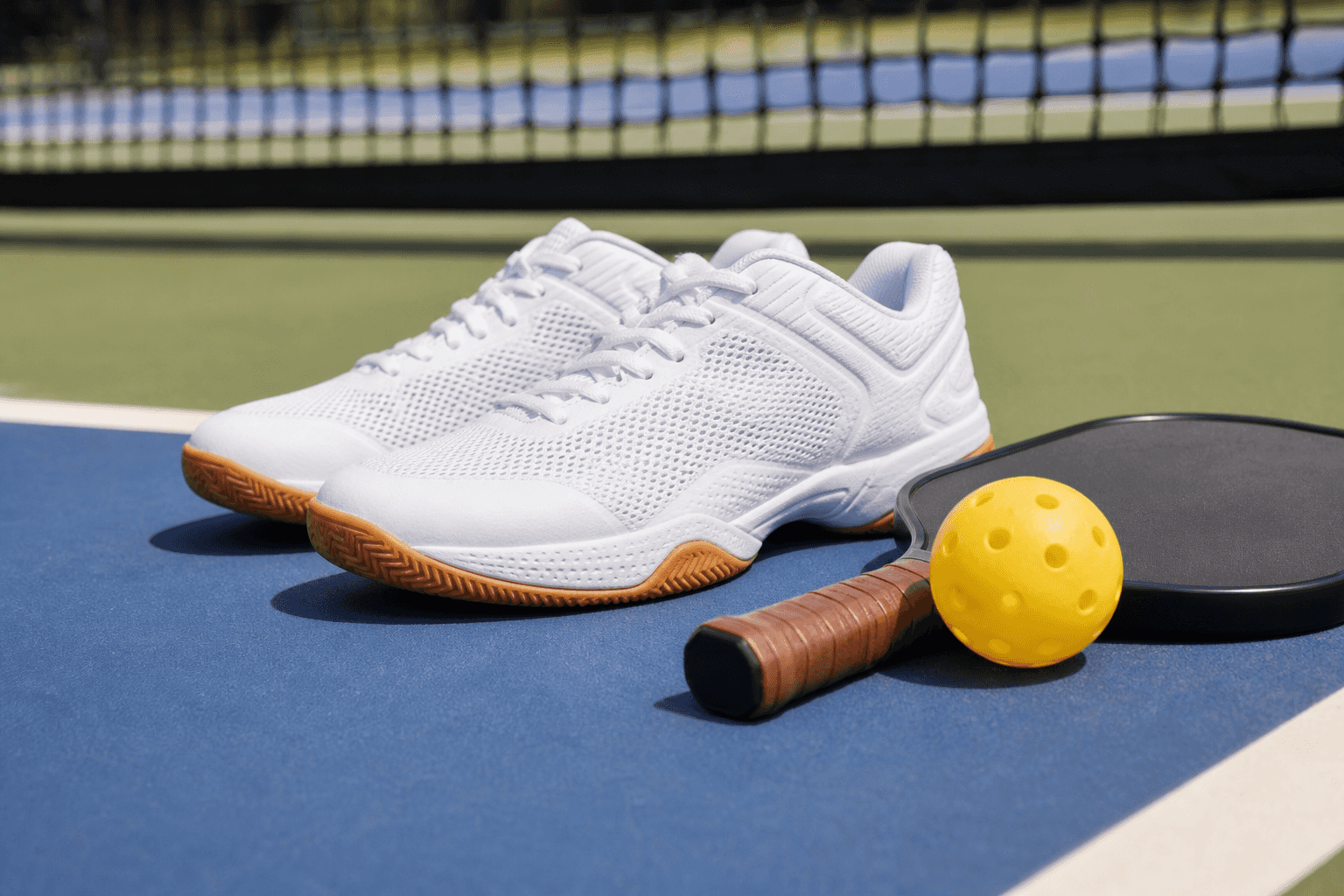
What an actual court shoe does is unglamorous and specific. It sits lower to the ground, uses firmer foam, and adds reinforced sidewalls. Some build in outriggers, what one sports podiatry group calls "stabilizing structures that extend the base of the shoe outward," widening your platform so the foot has somewhere to land before the ankle gives. The outsole is a denser rubber meant to grip an abrasive court and survive the toe-dragging that shreds a soft running tread in a month.
None of this is proprietary magic. It is the same reason hiking boots have stiff ankles and sprinters wear spikes: the tool matches the motion. The marketing problem is that brands sell the geometry as a feature of their particular shoe rather than a category of shoe you very likely already own.
You do not need shoes with "pickleball" printed on them
Here is the line the niche pickleball retailers bury at the bottom of the page. You do not need pickleball-specific shoes. Tennis shoes do the job. So do most court shoes built for squash, badminton, or volleyball, all of which were solving the lateral-movement problem decades before pickleball had a marketing budget. Even Under Armour, which would happily sell you the branded pair, concedes in its own guide that "you don't necessarily need special shoes for pickleball, though they do exist."
The price gap is the punchline. A premium court shoe runs around $200, and the pickleball-labeled versions cluster near the top of that range. A perfectly good tennis shoe sits well under $100, and the ten-year-old pair in your closet from your brief tennis phase outperforms the brand-new max-cushion runners you were about to wear. The decision was never running shoes versus pickleball shoes. It was high stack versus low stack, soft versus stable.
This is also where honesty cuts against the panic. No injury study isolates footwear as the cause of those emergency room visits. Falls are multifactorial: balance, reflexes, court conditions, and the simple fact that the average injured player is in their late sixties all matter more than shoe choice. Swapping your trainers will not injury-proof you. It removes one stacked-deck variable from a game that already favors the house.
What to actually wear
If you own tennis or court shoes, wear those and stop reading. If you are buying, look for a low-to-the-ground profile, firm rather than pillowy cushioning, and a flat outsole with no aggressive rocker. There is a five-second test you can run in the store: hold the shoe at both ends and twist. A court shoe resists and bends mainly at the toes; a running shoe wrings out like a wet towel. That stiffness through the midfoot is the lateral support your ankle is borrowing when you lunge. Indoor players want a non-marking gum sole that grips a polished floor without leaving scuffs. Skip anything marketed for maximum cushioning, anything with a pronounced curved toe, and trail runners, whose lugs offer zero lateral stability and wear off on concrete anyway.
The running shoes themselves are not the villain. They are superb at the one thing they were built for, which is not this. Save them for the morning jog, lace up something that wants to move sideways, and let the rec center clinic see one fewer patient.
Frequently asked questions about shoes for pickleball
Can you wear running shoes for pickleball?
You can, but it is not ideal. Running shoes are built for forward motion with a tall, soft heel that leaves the foot more room to roll sideways during the quick lateral lunges pickleball demands. They work in a pinch, but they raise your ankle-roll risk on a sport where most injuries come from falls.
Why are running shoes bad for pickleball?
Their tall stack height and soft cushioning are the problem. The thicker the foam between your foot and the ground, the longer the lever your ankle has to fight when you move sideways, and the easier it is to roll. Running shoes also lack the reinforced sidewalls and firm, flat outsole that court shoes use to keep you stable on lateral cuts.
Do you need special pickleball shoes?
No. Tennis shoes work, and so do most court shoes made for squash, badminton, or volleyball, all of which were built for lateral movement long before pickleball existed. Pickleball-labeled shoes tend to sit at the top of the price range, around $200, while a perfectly good tennis shoe costs well under $100.
What kind of shoes are best for pickleball?
Look for a low-to-the-ground profile, firm rather than pillowy cushioning, a flat outsole with no aggressive rocker, and reinforced sides. A quick test: twist the shoe end to end. A court shoe resists and bends only at the toes, while a running shoe wrings out like a wet towel. Indoor players should choose a non-marking gum sole.