Key Takeaway
- Routine dog teeth cleaning runs $300 to $700 at a general-practice vet. CareCredit puts the national average at $388, and extractions or a board-certified specialist can push the bill past $1,500.
- Most of the cost is anesthesia with monitoring and full-mouth X-rays, the parts that let a vet actually treat and inspect below the gumline, where the AVMA says most dental disease lives.
- Anesthesia-free cleaning is cosmetic scraping, not dentistry. The American Veterinary Dental College, AAHA, and a February 2026 JAVMA analysis all say it offers no medical benefit for periodontal disease.
- Ask for an itemized estimate and set a written call-me threshold, because the teeth that need pulling get discovered mid-procedure while the dog is already under.
- To pay less without buying the fake version: book in February for National Pet Dental Health Month, use a vet-school or shelter clinic, and brush at home, since preventive care costs about a third of treating established disease.
Quotes for the same-sounding service run from $307 to past $1,500. Most of the spread is anesthesia and X-rays, which are also the parts that make it medicine instead of grooming.
Ask three vets how much dog teeth cleaning costs and the quotes come back hundreds of dollars apart for what sounds like the same procedure. Banfield's published range is $300 to $700. PetMD puts a routine cleaning at a general-practice vet at $350 to $500. CareCredit's figures land the national average at $388 inside a $307 to $702 spread, and a dedicated pet dental clinic in Colorado posts $500 to $1,000 for a same-day cleaning with bloodwork and full-mouth X-rays. Add extractions or a board-certified veterinary dentist and the bill clears $1,500.
The spread looks like chaos and mostly isn't. It's the same procedure carrying different amounts of medicine, and the biggest line items, anesthesia and X-rays, are exactly the parts the cut-rate alternative leaves out. Understand that before trying to shop this bill down.
What dog teeth cleaning costs, line by line
| What you're buying | Typical 2026 price |
|---|---|
| Routine cleaning, general-practice vet | $300 to $700 |
| CareCredit's published national average | $388 |
| Cleaning with bloodwork and full-mouth X-rays (dental clinic example) | $500 to $1,000 |
| Advanced periodontal work or a boarded specialist | $1,500 and up |
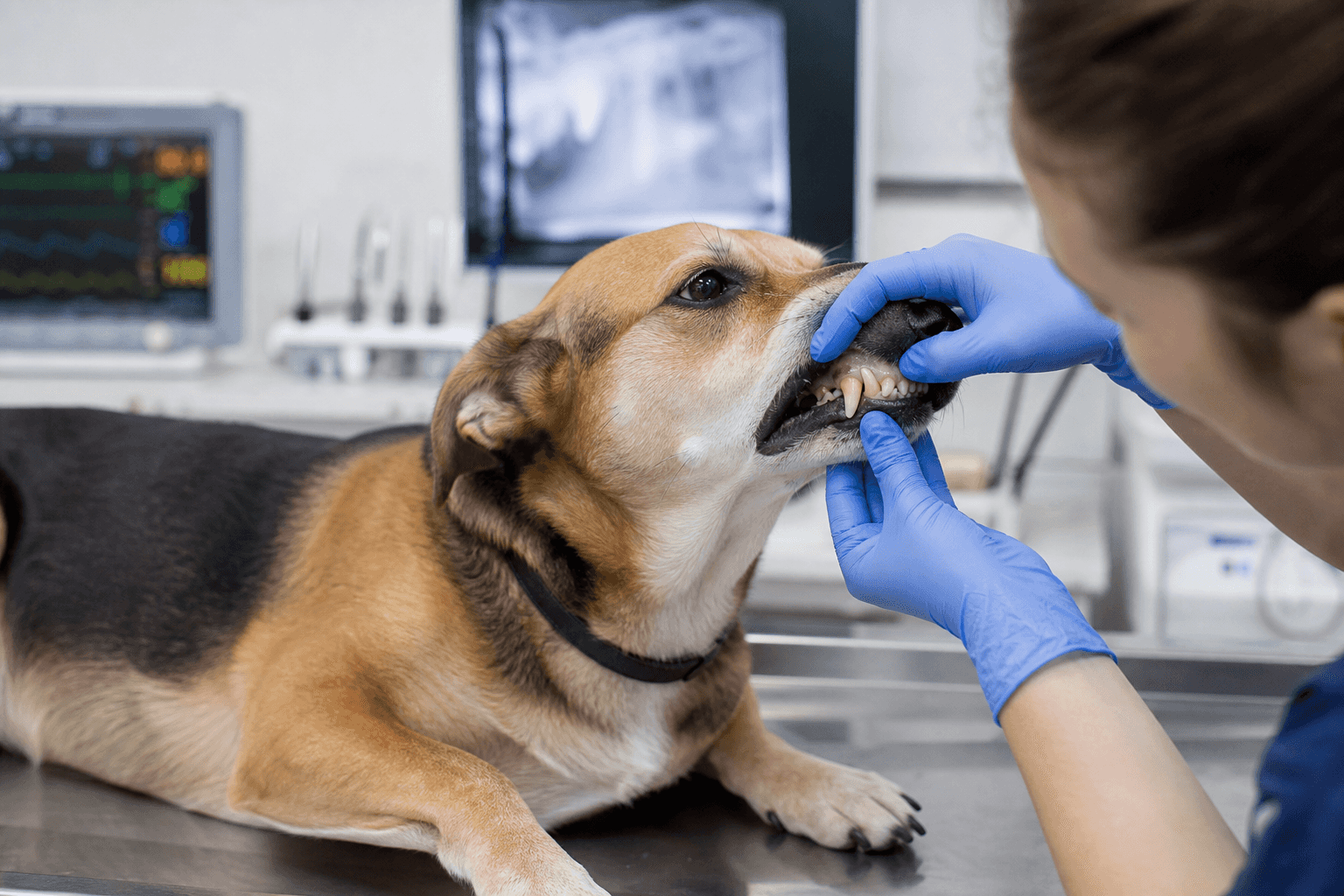
A real quote contains a pre-anesthetic exam and bloodwork, anesthesia with monitoring, scaling above and below the gumline, polishing, dental X-rays, and any extractions billed on top once the vet can finally see what's going on in there. Most practices also want a separate exam appointment before the procedure day, a step CareCredit says to expect, so there's usually an office-visit charge on the front end as well. PetMD recommends X-rays at every cleaning because roots and jawbone don't show their problems any other way, and per the AVMA, most dental disease sits below the gumline, where nobody can inspect a conscious dog.
So the anesthesia isn't an upcharge stapled to a cleaning. It's the reason the cleaning can reach the part of the mouth that's sick. A dog under anesthesia holds still for radiographs, doesn't bite the person holding a sharp scaler, and gets its gumline actually treated instead of admired.
Why one dog's quote is triple another's
Size moves the bill first, because anesthesia scales with the animal. Age moves it next: senior dogs get more pre-anesthetic bloodwork, and clinics differ on whether X-rays come bundled or itemized. Vocabulary moves it too: teaching hospitals like Auburn's call the full anesthetized workup a COHAT, a complete oral assessment and therapy, and a quote written that way includes the radiographs and charting that a bare cleaning quote may not. Then there's who does the work, a general-practice vet or a boarded dentist, and where the clinic sits, since big-metro overhead shows up in everything. The largest variable is the mouth itself. Nearly 80 percent of dogs have some periodontal disease by age three, per the AVMA, and disease stage is the true multiplier, because the teeth that need pulling get discovered mid-procedure while the dog is already under.
That mid-procedure discovery is where budgets die, so make two requests up front. Ask for an itemized estimate that separates the cleaning from contingencies. And set a call-me threshold in writing, so a $400 cleaning can't wake up as a $1,400 surgery without your phone ringing first. Good clinics do both without flinching. The diligence is worth it beyond the invoice: the AVMA lists kidney, liver, and heart muscle changes among the problems found in association with periodontal disease, so the mouth is rarely just the mouth.
The anesthesia-free cleaning is grooming with a scaler
The cheap alternative on every city's Instagram is anesthesia-free dentistry: someone scrapes the visible tartar off a conscious, restrained dog. The veterinary bodies that have weighed in are unanimous, in writing. The American Veterinary Dental College's standing position opposes it and declines to even call it dentistry, preferring the term non-professional dental scaling. AAHA's dental care guidelines call it not appropriate, citing patient stress, injury, aspiration risk, and the absence of any diagnostic value. The AVMA's plain summary: without anesthesia there is no cleaning or inspection below the gumline, which is where the disease lives. And a February 2026 analysis in JAVMA, the profession's flagship journal, concluded the practice provides no demonstrable medical benefit for controlling periodontal disease, with one study suggesting dogs came out worse.
Worse than nothing is the right frame, because the product being sold is white crowns over untreated roots, plus the comfortable feeling of having handled it. What the cheap option monetizes is anesthesia fear, and the fear runs ahead of the data: studies cited in that JAVMA paper put the risk of death within 48 hours of anesthesia at 0.05 percent in healthy dogs, about 1 in 2,000, using data from the late 2000s, and AAHA's guidance notes anesthesia is much safer now than in the past thanks to newer drugs and constant monitoring. Ask your vet about the risk profile for your specific dog. But skipping the anesthesia isn't a discount on the procedure. It's a different product.
How to pay less without buying the fake version
Timing is the easiest lever. The AVMA sponsors National Pet Dental Health Month every February, the Oregon VMA notes many practices discount dental exams and cleanings that month, and the advice from a veterinarian in Chewy's own coverage is simply to book the cleaning in February. Venue is the second lever: veterinary school clinics and shelter-affiliated clinics generally run cheaper than full-service private practices for the same anesthetized procedure.
Coverage is the lever people misunderstand. Standard pet insurance handles dental illness and injury, not routine cleanings; the cleanings live in optional wellness add-ons, and chains like Banfield fold them into their wellness plans. We sorted out what's worth paying for in our pet insurance guide. And the biggest lever is the boring one. The AVMA cites a 2013 Veterinary Pet Insurance analysis finding preventive dental care costs about a third of treating disease once it's established, which means waiting roughly triples the bill. The gold standard is daily brushing, which a Journal of Veterinary Dentistry study found 2 percent of dog owners actually do. For the other 98 percent of us, brushing a few days a week still beats never, Auburn's veterinary college treats mechanical plaque removal as the core of home care with diets and water additives as accessories, and VOHC-accepted chews are the realistic fallback, and we already dug into whether dental chews actually clean dog teeth.
A $400 cleaning buys medicine: the gumline, the X-rays, the parts you can't see. The cheap scrape buys a white smile on a sick mouth. Book the real one in February, brush on the days you remember, and the $1,500 quote stays somebody else's problem.